
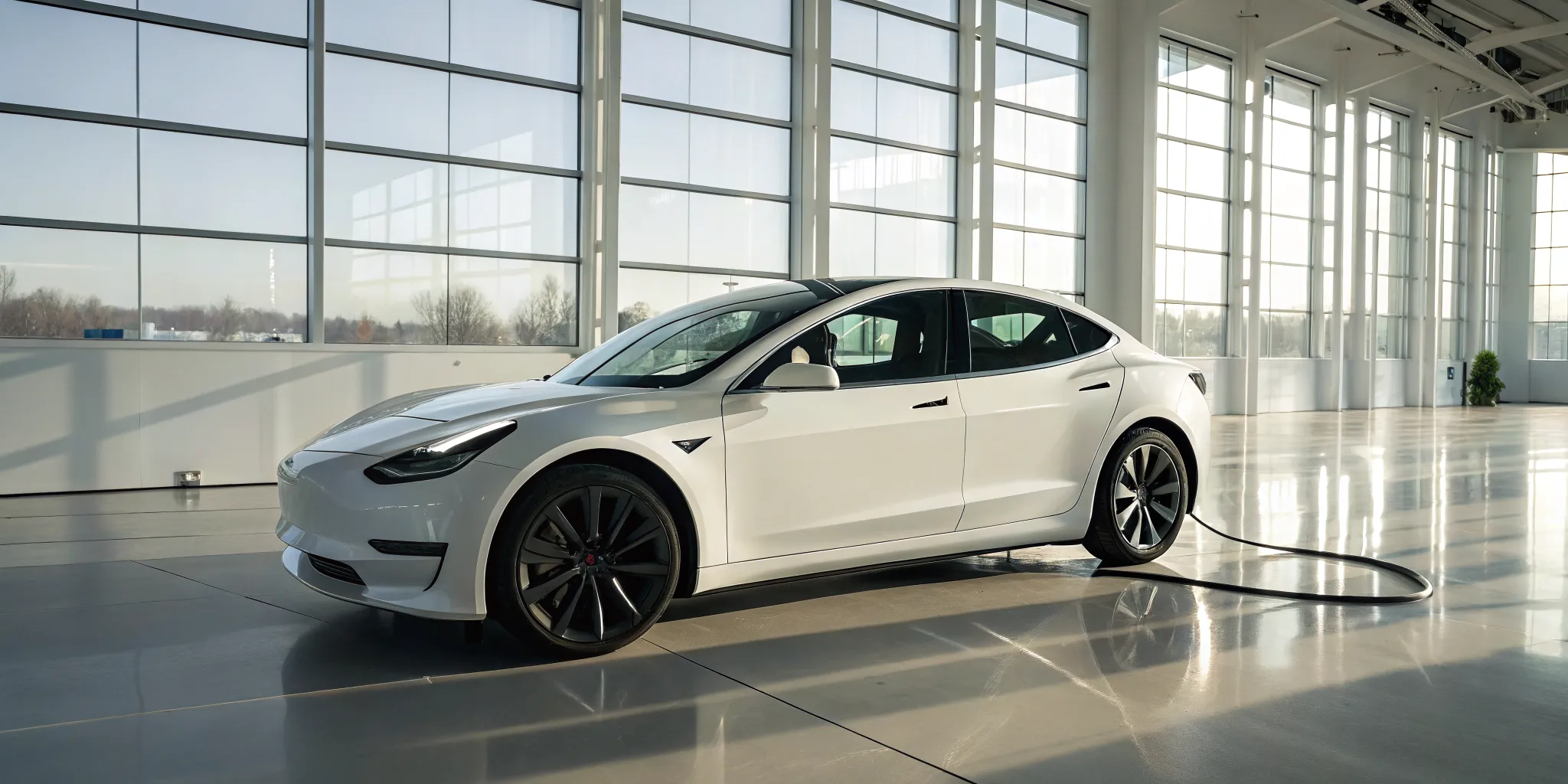
Let's be honest, when you think about buying a used Tesla, a few worries probably pop into your head. Will the battery still hold a charge? What about those stories of weird panel gaps? Is getting it serviced in DFW a nightmare? These are valid questions, and they're exactly what keeps many people from making the switch. We're here to cut through the noise and bust the common myths. A used Tesla can be one of the smartest, most enjoyable car purchases you'll ever make. This guide gives you the real story on battery life, build quality, and long-term ownership, so you can confidently search for a Tesla Model 3 for sale armed with facts, not fiction.
Key Takeaways
- Inspect the Car Like a Pro: Prioritize checking the battery's health report, aiming for 90% capacity or higher, and review the complete service history. A careful walk-around to spot panel gaps or interior wear is also essential before you buy.
- Take Advantage of Financial Perks: A used Model 3 is more affordable upfront and may qualify for a federal tax credit of up to $4,000 when purchased from a dealer. You will also save money long-term by skipping gas station trips and routine maintenance like oil changes.
- Match the Model 3 Trim to Your Lifestyle: Consider how you drive around DFW to pick the right car. The Standard Range is perfect for daily commutes, the Long Range gives you freedom for weekend trips, and the Performance model offers unmatched acceleration for the driving enthusiast.
How Much Does a Used Tesla Model 3 Cost?
Thinking about buying a used Tesla Model 3 is exciting, but the first question on everyone’s mind is usually about the price. The great news is that prices for used Model 3s have become much more affordable, putting this iconic EV within reach for more drivers. On average, you can expect to find a used Model 3 that's between one and five years old for around $25,000 to $26,000.
Of course, the final price tag depends on several factors, including the model year, mileage, trim, and overall condition. Let’s break down what you can expect to pay and how you can even get some money back on your purchase.
Price by Model Year
The age and mileage of a Model 3 are two of the biggest factors that determine its price. As with any car, newer models with fewer miles will cost more. Here’s a general guide to help you set your budget based on recent market data:
- 2017–2018 models (60k–90k miles): $17,000–$23,000
- 2019–2020 models (40k–70k miles): $20,000–$27,000
- 2021–2022 models (20k–50k miles): $24,000–$32,000
- 2023–2024 models (10k–30k miles): $28,000–$35,000
Remember, these are just averages. A car with lower mileage or desirable features like the Full Self-Driving package might be priced at the higher end of its range, while one with more wear and tear will be closer to the lower end.
What Drives the Price of a Used Model 3?
While the model year gives you a good starting point, other details play a big role in the final sticker price. The market for used EVs is always changing, but prices for the Model 3 have generally trended downward, making it a fantastic value.
Beyond age and mileage, the specific trim level is a major factor. The Standard Range is the most affordable, the Long Range offers more miles per charge, and the Performance model delivers incredible acceleration. Each comes with a different price point. Additionally, the car’s battery health, the condition of the interior and exterior, and whether it has premium software upgrades all contribute to its value.
Can You Get Tax Credits for a Used Tesla?
Yes, and this is a fantastic way to make your purchase even more affordable. As of January 1, 2023, you may be eligible for a federal tax credit when you buy a used electric vehicle. The Used Clean Vehicle Credit can give you back 30% of the sale price, up to a maximum of $4,000.
To qualify, the used Tesla Model 3 must have a sale price of $25,000 or less. Another key requirement is that you must buy the vehicle from a licensed dealer, like Auto Web Expo. This tax credit doesn't apply to private sales, so shopping at a trusted dealership is the smartest way to secure this benefit. It’s a huge perk that can significantly lower the true cost of owning a Tesla.
Which Tesla Model 3 Trim Is Right for You?
Choosing the right Tesla Model 3 trim comes down to what you value most in a car. Think about your daily routine and driving habits here in the DFW area. Are you mostly running errands and commuting, or do you have a longer drive and love weekend road trips? Maybe you just crave that instant, heart-pounding acceleration. Each Model 3 trim is designed for a different priority, so let's break down which one fits your life best.
The three main flavors are the Standard Range Rear-Wheel Drive (RWD), the Long Range All-Wheel Drive (AWD), and the Performance All-Wheel Drive (AWD). While they all share that signature Tesla look and feel, their capabilities and personalities are distinct. Finding your perfect match means you'll get a car that doesn't just meet your needs but makes every drive a little more enjoyable. You can explore our current selection of used Tesla Model 3s for sale to see these different trims firsthand.
Standard Range RWD
If your driving is mostly contained within the Dallas-Fort Worth metroplex, the Standard Range RWD is a fantastic and practical choice. It’s the perfect daily driver for commuting from the suburbs to downtown or for running errands all over town. Many of the 2021 and 2022 models feature a different battery chemistry (LFP) that is perfectly happy being charged to 100% on a regular basis. This means you can plug it in every night without a second thought, ensuring you always have a full "tank" for the day ahead. It’s an efficient and straightforward entry into the world of Tesla ownership.
Long Range AWD
For the driver who wants it all, the Long Range AWD model strikes an ideal balance. It offers a significant bump in range, giving you the freedom to take weekend trips to Austin or Houston without planning your life around charging stops. The all-wheel drive is a major plus, providing extra traction and confidence during those sudden Texas downpours. Many drivers find the 2020–2022 models to be a sweet spot, offering a great combination of extended range, AWD capability, and solid build quality. This is the versatile, do-anything trim that’s ready for both your daily commute and your next adventure.
Performance AWD
If your top priority is exhilarating speed, the Performance AWD is the only way to go. This trim is all about raw, instant acceleration that will push you back in your seat and put a smile on your face. It’s a true sport sedan that just happens to be electric. With all that power, however, comes a responsibility to check the car’s key components. It's especially important to have the suspension and tires inspected on a used Performance model, as their condition is critical to both the ride quality and its incredible handling. This is the ultimate Model 3 for the driving enthusiast.
Get to Know the Tesla Model 3's Features
The Tesla Model 3 isn't just a car; it's a piece of technology on wheels. From its impressive battery life to its minimalist, screen-focused interior, there are a few key features that make this EV stand out. Understanding these will help you appreciate what you're test-driving and decide if it’s the right fit for your life in DFW.
Battery, Range, and Charging
Let's talk about the heart of the Model 3: its battery. These batteries are built for the long haul, designed to last between 300,000 and 500,000 miles. While a new Long Range model can get up to 374 miles on a charge, most used Model 3s you'll find offer a very practical range of 220 to 330 miles. Before you buy, it’s smart to have a charging plan, whether at home or work. When you’re looking at a specific car, ask for the battery health report. You’ll want to see a capacity that’s ideally around 90% of the original to ensure you get plenty of miles out of your new ride.
Performance and Handling
One of the first things you'll notice when you drive a Model 3 is how fun it is. Owners consistently rave about the instant, fast acceleration and the smooth, quiet ride. You don't need the top-tier Performance trim to feel that signature Tesla kick, either. Even the base models are quick off the line, making your daily commute on the Dallas North Tollway a lot more enjoyable. It’s a car that delivers a sporty feel without sacrificing comfort, striking a great balance for both spirited drives and everyday errands. Many drivers find it’s a fantastic value, especially if you’re not set on the Full Self-Driving upgrade.
Tech and Infotainment
If you love modern tech, you'll feel right at home in the Model 3. The entire car is controlled through a large, central touchscreen that manages everything from music to climate control. You can also use the Tesla phone app to precondition the cabin on a hot Texas day or check your charging status. A huge plus for buying used is that Tesla sends regular software updates, so even a model that's a few years old gets new features and feels fresh. Plus, you get access to Tesla's extensive Supercharger network, which makes road trips from DFW to Austin or Houston a breeze.
Safety and Autopilot
Tesla's Autopilot is one of its most talked-about features. It’s best to think of it as a very advanced cruise control system that can help with steering, accelerating, and braking in its lane. While it’s a great assistant for highway driving, it is not a fully autonomous system, and you always need to stay engaged. It’s also good to be aware of a known quirk where the system can sometimes brake unexpectedly, often called "phantom braking." Understanding the Autopilot feature’s capabilities and limitations is key to using it safely and effectively on Texas roads.
Used Tesla Model 3: Pros and Cons
Thinking about a used Tesla Model 3? It’s a fantastic car, but like any vehicle, it has its strengths and weaknesses. Knowing both sides of the story is the best way to decide if it’s the right fit for you and your life in DFW. Let's break down the pros and cons to give you a clear picture of what to expect when you get behind the wheel.
Pros
First, the perks. The biggest win is affordability. Prices for used Model 3s have come down significantly, which means the first owner absorbed the steepest depreciation hit. This makes the Model 3 a great value for your money. You also get that signature Tesla driving experience; even the base models are zippy and incredibly fun to drive. Plus, you get access to Tesla's vast Supercharger network, which is a game-changer for road trips. And don't worry about the tech feeling dated. Thanks to over-the-air software updates, even older models get new features, keeping the car feeling fresh and modern.
Cons
Now, let's talk about the potential drawbacks. The main concern with any used EV is battery degradation. All batteries lose some capacity over time, and factors like frequent fast charging or our Texas heat can speed that up. It's also worth noting that some early Model 3s had build quality issues, like uneven panel gaps or paint imperfections. While Tesla has improved, it's something to look for during your inspection. Service can also be a mixed bag; some owners have great experiences, while others face long waits. Finally, Tesla prices can fluctuate, making future resale value a bit unpredictable.
How the Tesla Model 3 Stacks Up Against Other EVs
The Tesla Model 3 is a fantastic car, but it’s not the only electric vehicle on the road. It’s smart to see how it measures up against other popular EVs you might be cross-shopping here in the DFW area. Understanding the key differences in range, tech, and overall feel will help you confirm if the Model 3 is truly the right fit for your lifestyle. Let's look at how it compares to a few key competitors you'll likely encounter in your search.
Tesla Model 3 vs. Ford Mustang Mach-E
The Ford Mustang Mach-E is one of the Model 3’s strongest rivals, bringing iconic branding to the EV space. The Mach-E offers a competitive range of up to 300 miles, which is close to the Model 3 Long Range variant. However, one of Tesla's biggest advantages is its Supercharger network, which is more extensive and often provides faster charging times. Inside, the Mach-E has a more traditional dashboard layout compared to the Model 3’s minimalist, screen-focused design. When you compare the two EVs, your choice might come down to whether you prefer Tesla’s cutting-edge simplicity or Ford’s familiar comfort and style.
Tesla Model 3 vs. Chevrolet Bolt
If you're looking for a practical and budget-friendly entry into the EV world, the Chevrolet Bolt is a compelling option. Its main draw is affordability. While its range of around 259 miles is less than what a Model 3 offers, it’s more than enough for most daily commutes around Dallas. The trade-off is that the Model 3 provides a more premium experience with faster acceleration, a sleeker interior, and a quieter ride. A key difference highlighted by Kelley Blue Book is that the Model 3 receives over-the-air software updates that continuously improve the car, a feature the Bolt doesn't have.
Tesla Model 3 vs. Nissan Leaf
The Nissan Leaf has been around for a while and has a solid reputation for reliability and practicality. As one of the original mass-market EVs, it’s an affordable and dependable choice. However, its technology and performance feel a generation behind the Model 3. The Leaf’s maximum range is significantly lower, and its acceleration is more modest. The Model 3 offers a more dynamic and engaging driving experience, complemented by its advanced Autopilot features and large touchscreen interface. If your top priorities are performance and the latest tech, MotorTrend notes that the Model 3 is the clear winner.
Your Used Model 3 Inspection Checklist
Alright, you’ve found a used Model 3 that catches your eye. Before you start picturing it in your driveway, it’s time to do a little homework. A thorough inspection is your best tool for making a smart purchase, especially with a tech-forward car like a Tesla. This isn't just about checking for scratches; it's about understanding the vehicle's high-tech components and overall condition. Think of it as a final check to ensure you’re getting a great car, not just inheriting someone else's problems. This list will walk you through exactly what to look for, from the battery that powers it all to the software that runs the show.
Taking a few extra minutes to go through these steps can save you from future headaches and expenses. It empowers you to ask the right questions and know what to look for beyond the sleek exterior. Whether you're a seasoned car buyer or new to the world of electric vehicles, this checklist will give you the confidence to assess a used Model 3 like a pro. At Auto Web Expo, we want you to feel completely comfortable with your purchase, and that starts with being fully informed.
Check the Battery Health and Charging History
The battery is the heart of any EV, so its health is more telling than the odometer. Ask for a battery health report from the vehicle's service menu. A healthy used Model 3 should retain around 90% of its original capacity. Also, ask about its charging history. A battery that was primarily charged at home on a Level 2 charger will likely be in better shape than one that constantly used public DC fast chargers, which can be harder on the battery over time. Finally, confirm the status of the vehicle warranty, as the battery and drive unit are covered for 8 years or 100,000-120,000 miles, depending on the model.
Inspect the Exterior, Interior, and Tires
Give the car a slow, careful walk-around. Look for uneven panel gaps, which can be a quirk on some Teslas, and check for any paint imperfections or mismatched colors that might suggest a past repair. Don’t forget to inspect the large glass roof for any chips or cracks. Inside, check for excessive wear on the vegan leather seats and listen for any rattles or squeaks during your test drive. A quick look at the tires can also tell a story; uneven wear might point to an alignment problem that needs to be addressed.
Verify Software Updates and Features
One of the best parts of owning a Tesla is the over-the-air software that keeps the car feeling new. When you’re inspecting the car, tap through the large central touchscreen to make sure it’s responsive and that all the features are working correctly. Check that the car has recent software updates installed. You can also see what features are included in the latest versions to know what to expect. Test everything from the navigation and Bluetooth connection to the Autopilot features to ensure it all functions as it should.
Review the Service History and Recalls
A well-maintained car usually comes with a paper trail. Ask the seller for the vehicle’s complete service history to see what repairs or maintenance have been done. This gives you a clearer picture of how the car was cared for. It’s also a great idea to see if there are any outstanding recalls. You can easily do this by entering the car’s Vehicle Identification Number (VIN) on the National Highway Traffic Safety Administration recall lookup tool. Addressing any open recalls is important for the safety and performance of your vehicle.
Test the Keys and Phone-as-Key Setup
This might seem like a small detail, but it’s a crucial one for day-to-day convenience. A Model 3 comes with two key cards. Make sure you get both and that they both work to lock, unlock, and start the car. The real magic, however, is the Phone-as-Key feature, which lets you use your smartphone to access the car. During the inspection, ask the seller to walk you through the process of adding your phone as a key to ensure a smooth ownership transfer. Verifying this functionality will save you a potential headache later.
Is a Used Tesla Model 3 Practical in DFW?
Thinking about switching to a Tesla for your Dallas-Fort Worth commute? It’s a great question, and one we hear a lot. Driving in the Metroplex is its own unique experience, with sprawling highways connecting cities like Plano, Frisco, and Dallas. A used Tesla Model 3 can be a fantastic fit for this lifestyle, but it’s smart to go in with your eyes open. The short answer is yes, a Model 3 is incredibly practical here, but there are a few DFW-specific things to consider before you make the jump.
The biggest questions usually come down to three things: charging, the Texas heat, and your wallet. You’re probably wondering where you’ll charge it, if the summer sun will cook the battery, and if you’ll actually save money in the long run. These are all valid points, and we’ll walk through each one to give you a clear picture. Making the switch from gas to electric is less about sacrifice and more about a simple shift in your daily routine. Instead of planning your week around stops at the gas station, you’ll just plug in at home. For many DFW drivers, a Model 3 isn't just practical; it’s a significant upgrade to their daily drive.
Charging Your Tesla in Dallas-Fort Worth
One of the best parts of owning a Tesla in a major metro area is the charging infrastructure. For your daily commute, most of your charging will happen overnight at home, just like your phone. When you wake up, you have a "full tank" ready for the day. But for those longer drives or days when you need a quick boost, the Dallas-Fort Worth area is covered. Most used Model 3s can use Tesla's extensive Supercharger network, which has dozens of locations across DFW. You can easily find a station whether you’re shopping at NorthPark Center or heading out of town for the weekend, making range anxiety a thing of the past.
Texas Heat vs. Your Tesla's Battery
We all know Texas summers are no joke, and it's fair to wonder how the heat affects an electric car. All EV batteries experience some range loss over time, and factors like frequent fast charging or living in a hot climate can speed this up. It’s important to consider the battery's health and how it may be affected by our weather. When you're looking at a used Model 3, ask for a battery health report. To protect the battery long-term, try to park in a garage or shaded spot when you can. Teslas also have a Cabin Overheat Protection feature that keeps the interior from getting dangerously hot, which helps protect the battery and electronics.
How You'll Save on Gas and Repairs
This is where owning a Model 3 gets really exciting. You'll likely save a significant amount of money on both fuel and maintenance. Charging your car at home is much cheaper than filling up a gas tank, especially with the price of premium fuel for many luxury cars. You can use the Department of Energy's eGallon tool to compare electricity and gas prices in Texas. Beyond fuel, say goodbye to routine engine maintenance. There are no oil changes, spark plugs, or exhaust systems to repair. You’ll still have to take care of tires, brakes (which last longer thanks to regenerative braking), and cabin air filters, but your regular service costs will drop dramatically.
Busting Common Myths About Used Teslas
When you're looking at a used Tesla, it's easy to get caught up in rumors you've heard online. Let's clear the air and look at the facts behind some of the most common myths about buying a pre-owned Model 3, so you can shop with confidence.
"The battery will die quickly."
This is probably the biggest worry for anyone considering a used EV, but it's largely unfounded with Teslas. The battery in a Model 3 is designed for the long haul, with many lasting between 300,000 and 500,000 miles. While every EV battery loses a small amount of its capacity over time, Tesla's degradation is typically very slow. You can protect the battery's health by avoiding constant use of DC fast chargers and extreme temperatures when possible. Before you buy, ask for a battery health report. It’s common to find a used Model 3 with over 90% of its original battery capacity, giving you plenty of range for years to come.
"The build quality is always bad."
You may have seen stories about panel gaps or paint issues on Teslas, and it's true that some early models had these cosmetic quirks. However, these problems aren't as widespread as they seem, and Tesla has made significant improvements in its manufacturing process over the years. Many owners report no issues at all and are thrilled with their cars. The key is to inspect the specific Model 3 you're interested in. Take a close look at the body panels, trim, and interior finishes. Think of it like any other used car purchase: a thorough personal inspection gives you the final say on its quality and condition.
"It's impossible to get service."
The idea that you'll be stranded without service options is another myth that needs busting. While wait times at official service centers can vary, getting service is far from impossible, especially in the Dallas-Fort Worth area. You can easily find Tesla service centers in Dallas, Plano, and Fort Worth to handle major repairs. Plus, many common issues can be diagnosed and even fixed remotely through over-the-air software updates, so you might not even need to schedule a visit. For routine maintenance and other needs, our team at Auto Web Expo is also here to support you long after your purchase.
Should You Finance a Used Tesla in DFW?
Deciding how to pay for your used Tesla Model 3 is a big step, but it doesn’t have to be complicated. Financing is a popular route that makes it possible to drive away in your dream car without paying the full price upfront. In a competitive market like Dallas-Fort Worth, having your financing sorted out ahead of time can give you a real advantage. It shows sellers you’re a serious buyer and allows you to act quickly when you find the right Model 3.
Think of financing as a tool to manage your budget. By breaking the cost into monthly payments, you can fit a premium vehicle into your financial plan. Whether you work with a bank, a credit union, or a dealership like Auto Web Expo, the goal is to find a loan that works for you. We can help you explore your options and find a payment plan that fits your lifestyle, so you can focus on the fun part: enjoying your new Tesla on the roads of Plano and Frisco.
Your Financing Options
When you're ready to finance your used Model 3, you have a few solid paths to take. The most common route is securing traditional auto loans from a bank or credit union. Credit unions, in particular, are often praised for offering competitive interest rates, which can save you money over the life of your loan. It’s always a good idea to get pre-approved from one of these institutions before you start shopping, as it gives you a clear budget to work with.
Another convenient option is to handle financing directly through the dealership. At Auto Web Expo, we work with a network of trusted lenders to find great rates for our customers in the DFW area. This simplifies the process since you can shop for your car and secure your loan all in one place. Tesla also offers financing on their website, which can be a streamlined choice. While less common for used vehicles, leasing might also be an option, offering lower monthly payments if you prefer to switch cars every few years.
What Credit Score Do You Need?
Your credit score is one of the biggest factors lenders consider when you apply for a loan. Generally, having a good credit score of 700 or higher will help you qualify for the best interest rates. A higher score shows lenders you have a history of managing debt responsibly, making you a lower-risk borrower. Don't worry if your score is below that mark, though. Many lenders in the DFW area offer financing solutions for a wide range of credit profiles.
The main reason to aim for a strong credit score is the savings. A better score can mean a lower interest rate, which could save you thousands of dollars in interest over the course of your loan. Even a small difference in your rate adds up. If you're not sure where you stand, it's a good idea to check your credit report before you start applying. This gives you a chance to correct any errors and see what lenders will see.
Where to Find a Used Tesla Model 3 in DFW
Finding your dream car is the most exciting part of the process. In a bustling area like Dallas-Fort Worth, you have several avenues to explore when searching for a used Tesla Model 3. From specialized dealerships to online listings, knowing where to look can make all the difference. Let’s walk through the best places to start your search and what to keep in mind for each.
Auto Web Expo
Okay, I might be a little biased, but starting your search at a trusted local dealership is always a smart move. At Auto Web Expo, we specialize in high-quality, pre-owned luxury cars, and we always have an exciting selection of Teslas. The best part about buying from a dealership is the peace of mind. Every vehicle on our lot has been thoroughly inspected, so you can skip the guesswork. You can see the car in person, take it for a test drive around Plano, and ask our team any questions you have. We handle all the paperwork, making the entire process smooth and straightforward. You can check out our current inventory online to see what Model 3s we have waiting for you.
Private Sales and Online Marketplaces
If you enjoy the thrill of the hunt, you can also find used Model 3s through private sellers and online marketplaces. Websites like CarGurus and Facebook Marketplace are popular spots where private owners list their vehicles. These platforms let you filter by location, so you can easily find cars right here in the DFW area. Another fantastic resource is Tesla’s own Certified Pre-Owned program. Buying a CPO vehicle directly from Tesla means it has passed a multi-point inspection and often comes with an additional limited warranty, which is a huge plus for many buyers.
What to Know Before Buying from a Private Seller
While you can find great deals from private sellers, this path requires a bit more homework. Before you commit, always get a vehicle history report to check for accidents or title issues. It’s also wise to have the car inspected by a mechanic who is experienced with electric vehicles. They can assess the battery health and spot potential problems you might miss. Don’t be afraid to negotiate, but do your research first. Use a resource like Kelley Blue Book to understand the car’s market value so you can make a fair and confident offer. Taking these extra steps will help protect you and ensure you’re happy with your purchase.
Related Articles
Frequently Asked Questions
How can I be sure the battery in a used Model 3 is still good? This is a great question and a top concern for any smart EV buyer. The good news is that Tesla batteries are built to last, often for hundreds of thousands of miles. The best way to check is to ask for the battery health report, which you can see on the car's main screen. A healthy used model should ideally have around 90% of its original capacity. You can also ask about its charging history, as a car that was mostly charged at home will generally have a healthier battery than one that relied heavily on frequent fast charging.
Can I really get a tax credit for buying a used Tesla? Yes, you absolutely can, and it's a fantastic way to make your purchase more affordable. The Used Clean Vehicle Credit can give you up to $4,000 back. However, there are two very important rules to qualify. First, the sale price of the Model 3 must be $25,000 or less. Second, you must purchase the vehicle from a licensed dealership. This means that cars bought from private sellers are not eligible for the credit, making a dealership purchase a financially savvy move.
Which Model 3 trim is the best value for a DFW driver? The "best" trim really depends on your daily life here in the Metroplex. If your driving is mostly commuting and running errands around town, the Standard Range RWD is an excellent and efficient choice. For drivers who want more flexibility for weekend trips to Austin or Houston, or the added confidence of all-wheel drive in our unpredictable weather, the Long Range model is the perfect all-rounder. The Performance trim is for the true driving enthusiast who prioritizes speed above all else.
Besides the price, what are the biggest differences between buying from a dealership versus a private seller? The biggest difference comes down to peace of mind and convenience. When you buy from a dealership like Auto Web Expo, the vehicle has already been inspected, and we handle all the complex paperwork for you. It's a straightforward process. Plus, as we mentioned, buying from a dealer is the only way to qualify for the federal used EV tax credit. While you might find a good deal from a private seller, you'll be responsible for arranging your own mechanical inspection, verifying the vehicle's history, and managing the title transfer yourself.
Are repairs and maintenance on a used Tesla really expensive? This is a common myth, but the reality is that you'll likely save a lot of money on maintenance. Since there's no internal combustion engine, you can say goodbye to oil changes, spark plugs, and exhaust system repairs forever. Your brakes will also last much longer thanks to regenerative braking, which uses the electric motor to slow the car. While any car can have unexpected repair needs, the routine service costs for a Model 3 are significantly lower than for a comparable gas-powered luxury car.