
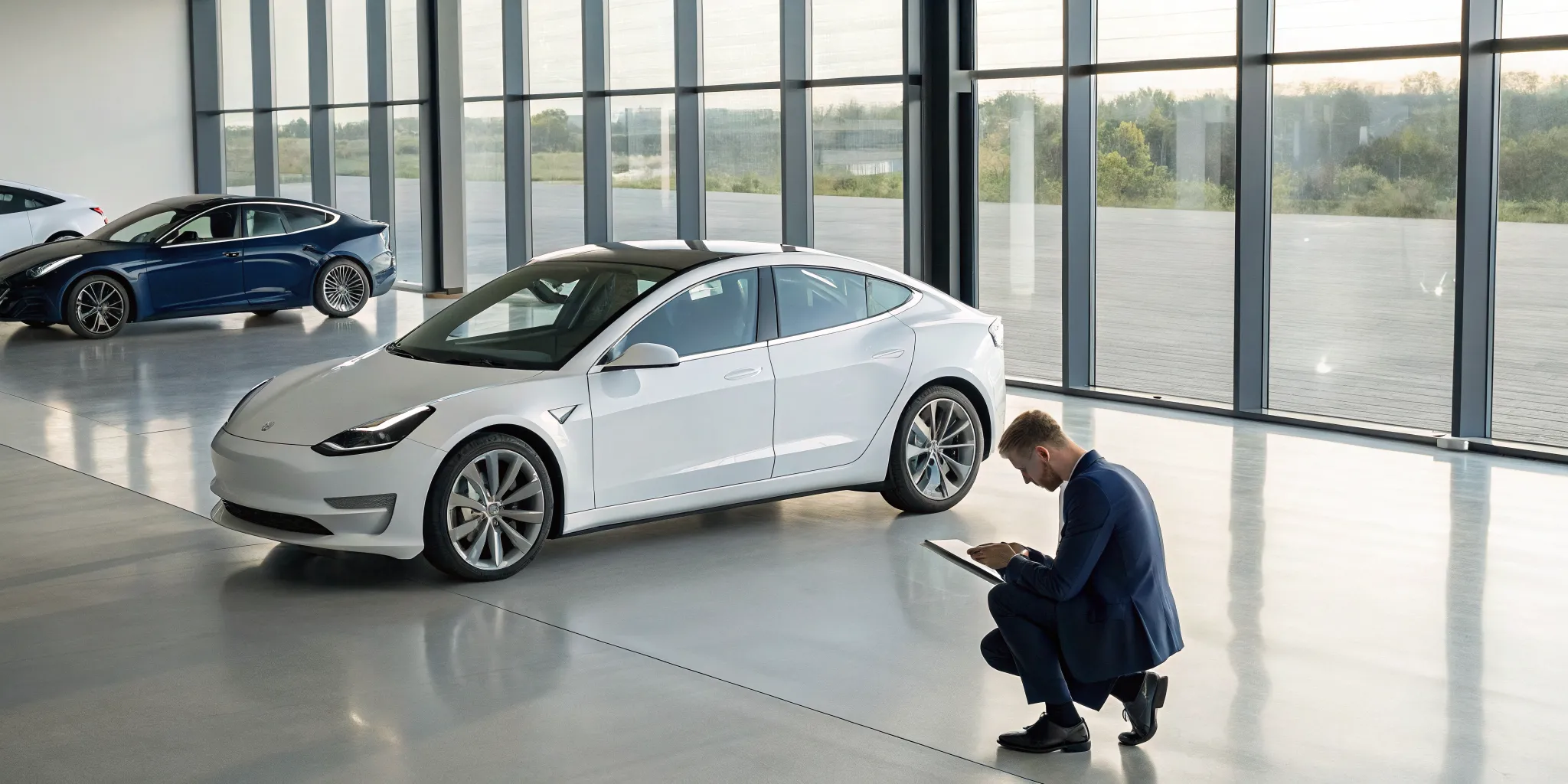
Let's be honest, part of the appeal of a Tesla is the "cool" factor. It's the minimalist interior, the silent but powerful acceleration, and the feeling of driving a car that’s genuinely from the future. It’s more than just a car; it’s a statement. For a long time, that statement came with a hefty price tag. But things have changed. Now, you can get all of that style, performance, and cutting-edge technology without breaking the bank. Finding a great used Tesla Model 3 under $25,000 is no longer a hunt for a needle in a haystack; it's a real opportunity for savvy buyers right here in Dallas.
Key Takeaways
- A $25,000 Budget Unlocks Great Options: You can realistically find a 2018–2023 Model 3, especially the Standard Range or Standard Range Plus trims. These models provide a fantastic mix of modern features and sufficient range for driving around the DFW area.
- Focus on Battery Health and Vehicle History: A Tesla's condition is best judged by its battery, not just its mileage. Check for a battery degradation of 15 percent or less, review the vehicle history report for accidents, and consider a professional pre-purchase inspection for total peace of mind.
- Maximize Savings with Financing and Tax Credits: Your final cost can be much lower than the sticker price. Get pre-approved for a loan to strengthen your buying position and purchase from a licensed dealer to qualify for the potential $4,000 used EV tax credit, which can act as an immediate discount.
What Can $25,000 Get You in a Used Tesla Model 3?
If you think owning a Tesla is out of reach, I have some great news. A budget of $25,000 can absolutely land you in the driver’s seat of a stylish and tech-forward Model 3. You won’t be scraping the bottom of the barrel, either. This price point opens up a surprising number of options, from lower-mileage recent models to older, feature-packed trims. It’s all about knowing what to look for and where to focus your search. Let’s break down what you can realistically expect to find.
Expected Model Years and Mileage
With a $25,000 budget, you’ll primarily be looking at Model 3s from the 2018 to 2023 model years. Mileage can vary quite a bit, with some cars showing as few as 22,000 miles and others closer to 120,000. Don't let higher mileage scare you off immediately; EVs have fewer moving parts than gas cars, so their maintenance needs are different. A well-maintained, higher-mileage Tesla can still be a fantastic value. This range gives you the flexibility to decide what matters more to you: a newer car or an older model that’s seen more of the road but might offer more features for the price.
Choosing Your Trim: Standard Range, Long Range, or Performance?
For the best all-around value, the 2019–2021 Model 3 Standard Range or Standard Range Plus is a fantastic target. These trims offer a great balance of performance, range, and modern features, with prices often falling between $19,000 and $24,500. While the Long Range and Performance models are less common under $25,000, they aren't impossible to find, especially if you’re open to an older model year. The Standard Range provides more than enough power for daily driving around Dallas, making it a highly recommended choice for most buyers.
How Many Options Are on the Market?
You’ll be glad to know you have plenty of options. Nationally, there are thousands of used Tesla Model 3s available for under $25,000, so you don’t have to settle for the first one you see. This wide selection means you can be picky about color, condition, and features. Even better, local markets have a healthy supply, so you can find great deals right here in the DFW area without having to travel. Having a large inventory to choose from gives you the power to find the perfect Model 3 that fits your exact needs and budget.
Which Model Years Should You Target?
When you're looking for a used Tesla Model 3 under $25,000, the model year is one of the biggest factors influencing price and features. You’ll generally find models from 2018 to 2023 in this price range. The key is to decide what matters more to you: getting the lowest possible price or having the latest technology. Early models offer an incredible entry point into the Tesla ecosystem, while newer ones pack in some significant updates. Let's break down the differences to help you find the perfect fit for your DFW drives.
The 2018–2020 Models: Your Most Affordable Option
If your top priority is getting into a Tesla for the lowest cost, the 2018–2020 Model 3s are your sweet spot. These early models deliver the iconic minimalist interior, instant acceleration, and Autopilot capabilities that define the Tesla experience. You can often find these cars priced between $16,000 and $25,000, making them an incredible value. While they might lack some of the refinements of later versions, they represent the most budget-friendly path to Tesla ownership. You can explore our current inventory of pre-owned vehicles to see what’s available right now in the Dallas-Fort Worth area.
The 2021–2023 Models: More Tech for Your Money
For a little more money, the 2021–2023 models offer some fantastic upgrades. Tesla gave the Model 3 a significant refresh in 2021, adding a heat pump for better cold-weather efficiency, a redesigned center console with wireless charging, and a power trunk. Finding one under $25,000 might mean it has slightly higher mileage, but for many drivers, the trade-off is worth it for the updated features. These newer models, like the 2019-2021 Standard Range Plus, often fall between $22,000 and $25,000. Getting pre-approved for financing can help you confidently shop for these slightly newer, tech-rich options.
What Features and Specs Matter Most?
When you're looking at a used Tesla Model 3, it's easy to get caught up in the excitement. But to make a smart purchase, you need to focus on the features that will actually impact your daily drive. Let's break down the three most important things to look at: battery range, driver-assist features, and software.
Real-World Battery Range
Let's be realistic: the official range number isn't what you'll always get day-to-day. The good news is that most Model 3s under $25,000 still offer a real-world range of 220 to 270 miles on a full charge, assuming the battery is healthy. This is more than enough for commuting around Dallas, running errands in Plano, or even taking a weekend trip. When you're test-driving, pay attention to the estimated range on the screen, but also be sure to get a full battery health report. This will give you a clear picture of what to expect and help you better in understanding EV range for your specific needs.
Autopilot vs. Full Self-Driving: What's the Difference?
This is a big one, and the names can be a little confusing. Every Model 3 comes with standard Autopilot, which is fantastic for highway driving. It includes adaptive cruise control (to match the speed of the car ahead) and lane-keeping assist. Think of it as a super-smart cruise control that makes traffic on the Dallas North Tollway much more bearable. Full Self-Driving (FSD) is an optional software upgrade that adds more advanced features, like navigating on its own and recognizing traffic lights. While FSD is impressive, you can find great deals on cars with just standard Autopilot, which is all many drivers really need. You can always review the features on Tesla's Autopilot page to see which package fits your driving style.
Key Tech and Software Updates to Look For
One of the coolest things about owning a Tesla is that it gets better over time with free, over-the-air software updates. These updates can add new features, improve performance, and refine the user interface, making an older car feel fresh again. When you're inspecting a used Model 3, it's a good idea to check which software version it's running. This ensures you have access to the latest security and entertainment features. If the car is connected to Wi-Fi, it should be able to download the latest update. You can even see a history of Tesla software updates to get an idea of what new features have been rolled out over the years.
Is a Used Tesla Model 3 Under $25,000 a Good Buy?
Finding a luxury electric vehicle like the Tesla Model 3 for under $25,000 feels like hitting the jackpot. And in many ways, it is. You get cutting-edge tech, thrilling performance, and a modern design without the brand-new price tag. But whether it’s a truly good buy depends on a few key factors that go beyond the sticker price. It’s not just about finding a car that looks good; it’s about finding one that’s healthy and fits your budget long-term.
The two biggest things to get right are the battery’s health and the total cost of ownership. A Tesla’s battery is its heart, and its condition will define your driving experience. At the same time, you need to look past the monthly car payment and understand all the costs involved, from charging to insurance. When you know what to look for, you can confidently decide if a pre-owned Model 3 is the right move for you. It’s an opportunity to get into a premium EV, and with the right approach, you can make a very smart purchase.
How Tesla Batteries Age Over Time
Think of a Tesla’s battery like the battery in your phone; it loses a bit of its total capacity over time. This is completely normal, and it’s called battery degradation. For a used Model 3, a 10% to 15% drop from its original range is perfectly acceptable. The red flag is when you see a drop closer to 25% or 30%, as that could signal a problem. Before you buy, ask what the car’s estimated range is at a 100% charge and check for any battery warning messages on the main screen. It’s also smart to ask about its charging history, since frequent DC fast charging can wear down a battery more quickly than charging at home. Understanding how Tesla batteries age is the best way to ensure you’re getting a car with plenty of life left in it.
Comparing Ownership Costs to Other Luxury EVs
While you’ll be waving goodbye to gas stations, the total cost of ownership for a Tesla involves more than just the initial price. You’ll want to budget for your monthly loan payment, electricity costs for charging at home, and insurance, which can sometimes be higher for Teslas. On the plus side, maintenance is minimal since there are no oil changes to worry about, though you may find the tires wear a bit faster due to the car’s instant torque. For a $25,000 car, a typical monthly payment might be around $350 to $450, depending on your credit and down payment. When you get pre-approved for financing, you can see exactly how these costs fit into your budget and compare them to owning a gas-powered luxury car.
How to Inspect a Used Tesla Before You Buy
Once you’ve found a promising used Tesla Model 3, it’s time to put on your detective hat. A thorough inspection is your best tool for making sure you’re getting a great car, not someone else’s problems. Unlike a traditional gas-powered car, inspecting a Tesla requires looking at a few unique components, especially the battery and software. Don’t worry, you don’t need to be an EV expert to spot the basics. Taking the time to check these key areas will give you the confidence to either move forward with the purchase or walk away from a bad deal. Think of this as the final, crucial step before you get behind the wheel of your new-to-you Tesla.
This process is about more than just kicking the tires. You'll want to examine the car's digital health report via its touchscreen, understand its charging history, and look for physical signs of wear that are specific to EVs. For example, since Teslas are so quiet, you might notice suspension creaks or rattles that would be masked by engine noise in another car. We'll walk through exactly what to look for, from the battery's performance to the car's service history. This checklist will help you feel prepared and in control, whether you're looking at a car from a private seller or here on our lot in the DFW area.
Check the Battery Health
The battery is the heart of any EV, so its health is your top priority. The easiest way to check it is to see the car’s estimated range at a full 100% charge. Ask the seller to provide a photo of the screen showing this number. You can then compare it to the car’s original EPA-rated range. A brand-new 2020 Model 3 Standard Range Plus, for example, had a range of 250 miles. It’s normal for a battery to lose some capacity over time, so a drop of 10% to 15% is generally fine. If the degradation is closer to 25% or more, it could signal a problem. Also, ask how the car was typically charged. Frequent fast charging can wear down a battery faster than charging at home. A deep dive into Tesla battery life can give you even more insight.
What's an Acceptable Mileage for a Used Tesla?
When you’re looking at Model 3s under $25,000, you’ll likely see cars with mileage between 45,000 and 80,000 miles, especially for the Standard Range Plus models from 2018 to 2020. Don’t let a number like 70,000 miles scare you off. Tesla batteries are built to last, and many can go for hundreds of thousands of miles with proper care. Instead of focusing only on the odometer, consider mileage in combination with the battery health report and overall condition of the car. A well-maintained Tesla with 80,000 miles and minimal battery degradation can be a much better buy than a lower-mileage car that was charged harshly or shows signs of neglect.
Why a Third-Party EV Inspection Is a Smart Move
Even if everything looks good on the surface, getting a pre-purchase inspection (PPI) from a qualified mechanic is one of the smartest moves you can make. Teslas don’t have oil changes or spark plugs, but they do have unique cooling systems, high-voltage electronics, and suspension components that deserve an expert eye. A mechanic who specializes in EVs will know exactly what to look for, from battery coolant leaks to issues with the drive unit. This step can save you from thousands of dollars in unexpected repairs down the road. An independent EV inspection checklist can help you understand what a technician will examine, giving you total peace of mind before you sign the papers.
What to Ask the Seller
Before you finalize the deal, make sure you have a clear picture of the car’s past and what’s included with the sale. Come prepared with a list of questions for the seller. Start by asking for a vehicle history report, which you can get from services like CarFax. This will show you any reported accidents, title issues, and the number of previous owners. You should also request all available service records to see how well the car was maintained. Finally, confirm what comes with the car. Does it include both key cards and the mobile charging connector? Asking these simple questions ensures there are no surprises after you take ownership.
Spotting Red Flags on a Used Tesla
Finding a great deal on a used Tesla Model 3 is exciting, but it’s important to go into your search with your eyes wide open. A price that seems too good to be true often is. Some sellers might hope you’ll get caught up in the thrill of buying a Tesla and overlook some serious issues. To make sure you drive away in a car you’ll love for years to come, you need to know what to look for. Think of yourself as a detective investigating your next car. A few careful checks can save you from major headaches and expensive repairs down the road.
Check for Accident History and Frame Damage
A suspiciously low price on a Model 3 can sometimes signal a hidden accident history. While a minor fender bender isn’t necessarily a dealbreaker, significant accidents, especially those causing frame damage, can lead to persistent problems. Teslas have a unique unibody structure, and improper repairs can compromise the car's safety and performance. Always start by getting a vehicle history report from a service like CarFax or AutoCheck. This report will show you reported accidents, title issues, and service records. Even if the report is clean, it’s wise to have a professional mechanic who knows EVs give the car a thorough inspection to spot any signs of shoddy repair work.
Investigate the Title and Ownership History
The vehicle’s title tells a critical story. Be extremely cautious of any car with a salvage or rebuilt title. This means an insurance company declared it a total loss at some point. While it may have been repaired, there’s no guarantee of the quality of the work, and it can be difficult to insure or resell. Beyond the title, dig into the previous owner's habits. Ask for service records and check the car’s touchscreen for any battery warning messages. It's also fair to ask how the car was charged. A battery that was constantly drained to empty or exclusively charged at high-speed Superchargers may have more wear. You can learn more about what different Texas title brands mean before you buy.
Know the Software and Hardware Limits of Older Models
Not all Model 3s are created equal, especially when it comes to their tech. Early models (from 2018-2019) may have older hardware, like Hardware 2.5 (HW2.5), which doesn’t support all the latest features or the full capabilities of Full Self-Driving (FSD). Newer models come with HW3 (or even HW4), which is more powerful. While an older car might seem like a bargain, you could miss out on features like Sentry Mode recordings or better graphics and processing speed. Before you buy, understand the specific Tesla hardware in the car you’re considering. This ensures you’re not just looking at the sticker price but the total value and experience you’re getting.
Can You Get a Tax Credit on a Used Tesla Model 3?
Finding a used Tesla Model 3 under $25,000 is already a great deal, but what if you could lower the price even more? You might be able to, thanks to the federal tax credit for used clean vehicles. This program can put up to $4,000 back in your pocket, making that dream of owning a Tesla even more realistic. It’s a significant saving that can make a huge difference in your overall budget. However, there are specific rules you need to follow to qualify, so let’s walk through them together.
See if You're Eligible for the Federal Used EV Tax Credit
First things first, let's see if you and the car qualify. The Used Clean Vehicle Credit is designed to make electric vehicles more affordable. The credit is worth 30% of the vehicle's sale price, with a maximum credit of $4,000. To be eligible, one of the most important rules is that you must buy your used EV from a licensed dealer. That means private party sales won't qualify. So, when you shop at a dealership like Auto Web Expo, you're already on the right track. The vehicle's sale price must also be $25,000 or less, which aligns perfectly with the cars we're discussing.
Understand the Income Limits and Dealer Requirements
Beyond the vehicle's price and where you buy it, your personal income also plays a role. The government has set income caps to ensure the credit goes to those who need it most. To qualify, your modified adjusted gross income (AGI) can't exceed certain limits: $150,000 for married couples filing jointly, $112,500 for heads of households, or $75,000 for all other filers. You can use your AGI from the year you take delivery of the car or the year before, whichever is less. The dealer you purchase from also needs to be registered with the IRS and must provide you with a time-of-sale report confirming the car's eligibility.
How the $4,000 Credit Reduces Your Total Cost
So, how does this credit actually save you money? You have two options. The traditional way is to claim the credit when you file your federal income taxes for the year you bought the car. This would reduce your tax liability by up to $4,000. But an even better option is now available: you can transfer the credit to the dealership at the time of purchase. This allows the dealer to apply the credit directly to the sale, effectively acting as an immediate discount. For a $25,000 Tesla, this could instantly lower your purchase price to $21,000, reducing your down payment or monthly loan payments right from the start.
How to Finance a Used Tesla in the DFW Area
Finding the perfect used Tesla Model 3 is exciting, but the financing part can feel a little daunting. Don't worry, it's more straightforward than you think. Taking a few simple steps before you even visit a dealership in the Dallas-Fort Worth area can put you in complete control of the process. By getting pre-approved, exploring your loan options, and setting a clear budget, you’ll be able to shop with confidence and drive away in your new Tesla knowing you got a great deal.
Why You Should Get Pre-Approved First
Think of pre-approval as your superpower in the car-buying process. Before you start shopping, getting preapproved for a car loan from a bank or credit union gives you a firm budget to work with. You’ll know exactly how much you can afford and what your interest rate will likely be. This puts you in a strong negotiating position because you’re not just a shopper; you’re a buyer with financing already secured. It also saves a ton of time at the dealership. Instead of filling out financing paperwork on the spot, you can focus on what really matters: finding the right Tesla Model 3 for you.
Dealerships, Banks, or Credit Unions: Where to Get Your Loan
When you're deciding where to get a car loan, you have a few solid choices: your bank, a local credit union, or the dealership itself. Credit unions are often praised for offering lower interest rates and more personal service, so they are a great place to start. Your own bank is another convenient option. Dealership financing, like what we offer at Auto Web Expo, provides a one-stop-shop experience. We work with a network of lenders to find competitive rates for our DFW customers, saving you the hassle of shopping around. The best approach is to get a quote from your bank or credit union first, then see if the dealership can match or beat it.
Budgeting for Your Monthly Payment and Down Payment
A solid budget starts with two key numbers: your down payment and your monthly payment. A common guideline is to figure out how much you should put down on a car, with many experts suggesting 20% of the vehicle's price. A larger down payment is always better, as it lowers your monthly payment and reduces the total interest you'll pay over the life of the loan. From there, use an online auto loan calculator to see how different loan terms and interest rates affect your monthly payment. This helps you find a comfortable number that fits your lifestyle without stretching your finances too thin.
Where to Find a Used Tesla Model 3 Under $25,000 in Dallas-Fort Worth
Now that you know what to look for, let's talk about where to find your future Tesla right here in the Dallas-Fort Worth area. The great news is that the market for pre-owned Model 3s is active, and that $25,000 budget puts you in a great position to find a quality vehicle. Your main decision will be whether to work with a dealership or buy from a private seller.
Dealership vs. Private Seller: Which Is Right for You?
Choosing between a dealership and a private seller really comes down to what you value most in the car-buying process. Going through a private seller can sometimes mean a lower sticker price, but it also puts more responsibility on you. You’ll need to handle the vehicle inspection, verify its history, and manage all the title and payment paperwork yourself. It’s a hands-on approach that can work if you’re comfortable with the extra steps and potential risks.
On the other hand, a dealership offers a more streamlined and secure experience. Reputable dealers, especially those specializing in luxury vehicles, provide thoroughly inspected cars. Many also offer warranties and financing assistance, which simplifies the entire process. You get peace of mind knowing the vehicle has been vetted and that you have support after the sale.
Find Your Pre-Owned Tesla at Auto Web Expo
For drivers in Plano, Frisco, and across the DFW metroplex, a specialized used luxury dealership is often the best place to start. At Auto Web Expo, we focus on curating a selection of high-quality pre-owned vehicles, including the Tesla Model 3. This means you don’t have to sift through countless listings to find a great car; we’ve already done that work for you. Our team understands the specifics of luxury EVs and can answer your questions about battery health, software, and features.
Plus, we handle everything in-house, from trade-ins to financing, making your purchase smooth and straightforward. You can explore our current inventory of used Teslas online to see what’s available. We bring in new vehicles regularly, so you can find a Model 3 that fits your budget and wish list without the hassle of a private sale.
Related Articles
Frequently Asked Questions
What's the most important thing to check before buying a used Model 3? Without a doubt, you should focus on the battery's health. The easiest way to get a quick assessment is to see the car's estimated range when it's charged to 100 percent. You can then compare that number to its original EPA-rated range. It's perfectly normal for a battery to lose some of its capacity over time, so a drop of around 10 to 15 percent is nothing to worry about. A significantly larger drop, however, could signal a potential issue.
Should I be worried about buying a Tesla with high mileage? Not necessarily. For electric cars, mileage doesn't tell the whole story. Since EVs have far fewer moving parts than gas engines, a high-mileage Tesla can still be in excellent shape. Instead of focusing only on the odometer, pay closer attention to the battery health report and the vehicle's service history. A well-maintained Model 3 with 80,000 miles is often a much smarter purchase than a lower-mileage one that shows signs of neglect.
Do I really need Full Self-Driving, or is standard Autopilot enough? For most drivers, the standard Autopilot that comes with every Tesla is more than enough. It includes adaptive cruise control and lane-keeping assistance, which are fantastic for making highway commutes and traffic less stressful. Full Self-Driving (FSD) is an optional software package with more advanced features for city streets. While the technology is impressive, standard Autopilot provides the core features that drivers use most often, and sticking with it can save you a good amount of money.
How do I qualify for the $4,000 used EV tax credit? To get the credit, you need to meet a few key requirements. First, the car's sale price must be $25,000 or less, and you must purchase it from a licensed dealership, not a private seller. Second, your personal income must fall below a certain limit set by the IRS. Finally, the dealership can help you transfer the credit at the time of sale, which acts as an immediate $4,000 discount on the car's price, lowering your total cost right away.
Besides the car payment, what other costs should I budget for? While you'll be saving a lot of money on gas, there are a few other costs to keep in mind. You'll want to budget for your home electricity usage for charging, which is still significantly cheaper than gasoline. It's also a good idea to get insurance quotes, as rates for Teslas can sometimes be higher than for other cars. On the plus side, you can forget about oil changes and other routine engine maintenance, though you may replace tires a bit more often due to the car's quick acceleration.