
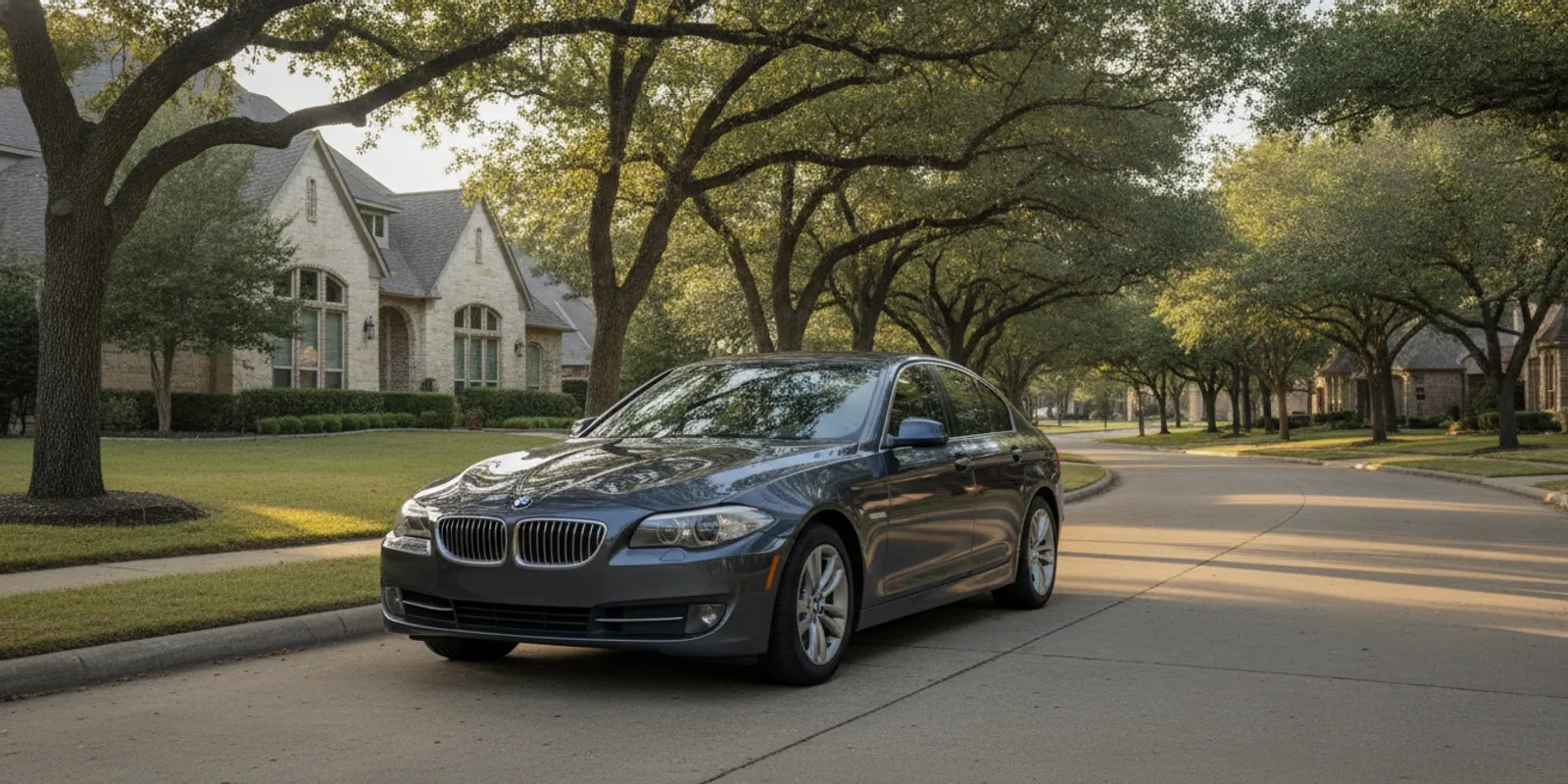
The BMW 535i combines a six-cylinder engine with the space and composed ride of a midsize luxury sedan, making it worth a close look for DFW drivers who want more than a basic commuter. Auto Web Expo is at 4041 West Plano Parkway, Plano, TX 75093; call (469) 626-0777 with questions about a specific car or its history.
See available BMW 5 Series inventory and ask our Plano team about a 535i.
What makes the BMW 535i different?
The 535i is a version of the BMW 5 Series sedan equipped with a turbocharged 3.0-liter inline-six engine. In the U.S. F10 generation, its commonly quoted output is 300 horsepower and 300 lb-ft of torque. That gives the car brisk acceleration while preserving the quiet, settled character expected of a midsize luxury sedan. It is a different proposition from a four-cylinder 528i: the 535i’s six-cylinder power delivery is the central reason many shoppers seek this badge.
Most shoppers searching for a pre-owned BMW 535i are looking at the F10-generation sedan, sold in the U.S. from the 2011 through 2016 model years. The badge should not be confused with a 535i Gran Turismo, a taller, hatchback-style body variant offered during part of that period. Confirm the body style on the vehicle listing and registration if you have a specific configuration in mind.
Model year, drivetrain, package, and installed options all matter. A 535i name alone does not tell you whether a car has rear-wheel drive or xDrive all-wheel drive, which comfort features it includes, or what condition its wear items are in. Review the actual vehicle details rather than assuming that every example has the same equipment.
How should you compare BMW 535i model years?
The F10 535i’s core appeal remains consistent across its U.S. sedan model years: a turbocharged inline-six, a roomy cabin, and a more substantial feel than a compact sport sedan. The mid-cycle refresh arrived for the 2014 model year. That is a useful dividing point when comparing exterior and cabin details, but it does not replace checking the individual car’s options and condition.
Be precise about what “year” means during a search. A vehicle’s model year can differ from the date it was first sold or registered, and online listings may use shortened descriptions. Confirm the model year from the vehicle identification information and its documents. When comparing an early F10 with a later example, weigh the actual price, mileage, history, options, and condition alongside the refresh. A newer model year is not a substitute for evidence that a specific vehicle has been cared for.
Similarly, distinguish factory equipment from features added later. Ask whether a listed feature was part of the car’s original build or installed afterward, and whether the owner has records for the work. This is especially helpful when comparing technology or driver-assistance equipment, because a package name or generic online description may not fully describe what is present. Request a demonstration of features that matter to you before you decide.
| Model-year group | What to know | What to verify on the specific car |
|---|---|---|
| 2011–2013 | Earlier F10 sedan years, with the 535i six-cylinder powertrain and the generation’s spacious, comfort-focused layout. | Equipment and technology options, service records, tire and brake condition, and how the car has been maintained. |
| 2014–2016 | F10 years after the mid-cycle refresh. The 535i continues as a six-cylinder sedan, with details varying by year and options. | Whether the features you want are actually installed, the vehicle’s history, and the condition of its mechanical and cabin systems. |
| Any year listed as 535i Gran Turismo | A distinct hatchback-style body rather than the standard 5 Series sedan. | Confirm that the body style, cargo access, and seating layout suit your needs before comparing it with sedan listings. |
This is a broad shopping framework, not a substitute for the build information on an individual vehicle. BMW equipment can depend on the model year, packages, and original configuration. If a feature is important—such as a particular driver-assistance system, upgraded audio, or a panoramic roof—ask for confirmation that it is present on the exact car. A feature shown in general model-year literature may not be on every 535i.
Inventory changes, so a model-year group is not a promise that a particular car is available. Browse the BMW 5 Series listings and compare each vehicle’s stated year, photos, equipment, and history details. If you are open to a smaller sedan, the pre-owned BMW 3 Series selection can provide a useful size and driving-position comparison.
What is the 535i like to drive?
The turbocharged inline-six is the defining part of the 535i experience. Its 300 horsepower and 300 lb-ft of torque provide confident passing power and smooth acceleration when merging onto Dallas North Tollway or changing speed on an interstate. Rather than needing to rev constantly to make progress, the engine delivers substantial torque through the normal driving range. The result is a sedan that can feel relaxed in everyday traffic and responsive when the driver asks for more.
The car’s character is not only about acceleration. A 5 Series is larger and more substantial than a compact sedan, which can help it feel composed on a longer trip. Steering response, ride comfort, and cabin quietness are best judged in person because tire type, tire condition, suspension wear, and the individual car’s setup can change how it feels. During a test drive, try a mix of surface streets and a faster road when safe, and listen for noises over bumps or during turns.
Some 535i examples have rear-wheel drive, while others have xDrive all-wheel drive. Do not infer the drivetrain from the model badge alone. Check the vehicle description and, if needed, ask the seller to confirm it. For North Texas driving, think about your own priorities: the type of roads you regularly use, the way you want the car to respond, and whether all-wheel drive is important to you. A test drive can help settle questions about steering feel and ride comfort, but it cannot replace a mechanical inspection.
Which comfort and technology features should you look for?
The 535i’s cabin is designed for long-distance comfort as well as daily errands. Front-seat support, a quiet ride, and a conventional sedan layout are key strengths for drivers who spend time commuting between Plano, Dallas, Frisco, and other DFW destinations. Rear-seat room and trunk access may also make it a practical choice for passengers or luggage. If you often carry adults in the back, have them sit in the car before deciding; personal comfort matters more than a specification sheet.
Available equipment varies, so use the listing and a hands-on check rather than assuming every 535i is similarly appointed. When you inspect a candidate, test the features you expect to use often:
- Adjust the driver’s seat and mirrors, and confirm that the seating position feels comfortable and easy to set.
- Pair a phone if the vehicle supports the connection you need, then check the display, audio, navigation, and controls.
- Operate the climate system and check that the controls respond as expected.
- Check the windows, locks, lights, parking sensors, cameras, and other visible convenience features fitted to that car.
- Inspect the upholstery, trim, and cargo area for wear that may not be clear in listing photos.
- Verify any driver-assistance or premium audio features in the specific vehicle instead of relying on a generic equipment list.
Technology from this generation may feel different from what is in a newer car. Consider whether the interface and connectivity meet your daily needs before buying. Bring the phone you normally use and take time to try the main controls while parked. This is a practical way to decide whether the cabin is a good fit without relying on assumptions about a model-year feature.
What should you check before buying a pre-owned 535i?
A 535i can deliver an appealing balance of power and comfort, but a used luxury sedan deserves a careful, vehicle-specific review. The earliest F10 examples are now more than a decade old, so condition and documented care can matter as much as the odometer reading. Ask for the available service and ownership history, and make sure the vehicle identification details match the car and its records.
- Review the listing and history. Confirm model year, sedan versus Gran Turismo body style, drivetrain, mileage, equipment, and any disclosed history. Ask about records for routine service and prior repairs. A clean-looking exterior alone does not establish how a vehicle was maintained.
- Inspect the exterior in good light. Look for mismatched paint, uneven panel gaps, cracked glass, wheel damage, and tire wear. Uneven wear can be a reason to ask additional questions about alignment or suspension condition. Check that the tires are a suitable matching set and note their remaining tread.
- Look through the cabin carefully. Compare seat, steering-wheel, and control wear with the stated mileage and the vehicle’s general condition. Test seat adjustment, climate controls, infotainment, windows, lighting, and other fitted equipment. Note any warning messages rather than assuming they are minor.
- Take a deliberate test drive. Start with the car cold if possible, then listen for unusual sounds and pay attention to smooth starting, acceleration, shifting, braking, steering, and ride quality. Test in more than one road setting when practical. Do not ignore a warning light, vibration, hesitation, or noise; ask for an explanation and appropriate follow-up.
- Arrange an independent inspection. Before purchase, consider having a qualified technician familiar with BMW vehicles examine the specific car. Ask the inspector to check the engine, transmission, cooling system, suspension, brakes, tires, electronics, and any concerns raised during your drive. An inspection can identify issues to understand; it is not a promise that future repairs will not be needed.
Ask direct questions about how the car was prepared for sale, what documentation is available, and what is included in the transaction. Request that any important representations be put in writing. If a seller cannot answer a question immediately, make the answer a condition of moving forward rather than filling the gap with assumptions. Buyers comparing several cars can use the same checklist on each one to make the differences easier to see.
A simple way to compare two 535i listings
When two cars appear similar online, separate the decision into three parts: documented facts, observed condition, and personal fit. Documented facts include model year, mileage, drivetrain, title and history information, options, and available service records. Observed condition includes tire and brake wear, cabin wear, warning messages, and how the vehicle behaves during a drive. Personal fit covers seating comfort, visibility, ease of using the controls, and whether the car feels right on your usual roads.
Write down the same items for each candidate instead of relying on memory. For example, note whether the vehicle has the drivetrain you want, whether its records answer your questions, and whether any inspection findings require follow-up. A lower odometer reading does not automatically settle the comparison if records are incomplete or the car needs immediate work. Conversely, normal cosmetic wear does not by itself establish a mechanical problem. Use inspection results and clear documentation to understand what you are comparing.
- Before the visit: Save the vehicle details, list must-have features, and note questions about history or equipment.
- At the vehicle: Confirm that its identifying details match the listing, test the features, and take a consistent test drive.
- Before purchase: Review the inspection findings, request explanations for unresolved items, and include expected near-term expenses in your budget.
This process is useful whether you are comparing two 535i sedans or deciding if another 5 Series configuration is a better fit. If a specific option is a deciding factor, ask for proof that it is installed and working. If a history detail is unclear, do not treat a verbal guess as confirmation. A few minutes spent recording the differences can make the final decision more objective.
How should you think about ownership costs?
A pre-owned 535i may cost less to acquire than a comparable new luxury sedan, but purchase price is only one part of ownership. Set a budget for insurance, fuel, tires, brakes, and routine upkeep, and keep room for repairs that may arise as a vehicle ages. Actual costs depend on the car’s condition, mileage, parts, labor, driving habits, and the work it needs. Avoid treating a generic estimate as a guarantee for a particular vehicle.
Before committing, compare the car’s current condition with your budget and ask what maintenance is due soon. Tire replacement and brake work can be substantial expenses on a luxury vehicle, so inspect them rather than assuming they have plenty of life remaining. If the car has warning lights or a repair recommendation, obtain a clear diagnosis and estimate from a qualified shop before making your decision.
Financing is another part of the total plan. Auto Web Expo offers online financing resources; review the financing information and consider how the payment, down payment, insurance, and ownership reserve work together. Approval and loan terms depend on individual circumstances. Looking at the whole monthly budget can help you decide whether a 535i is a sensible fit, not just whether a particular payment looks attractive.
Is a BMW 535i the right fit for your DFW commute?
The 535i is worth considering if you want a midsize sedan with six-cylinder power, a refined cabin, and useful space for passengers and luggage. It may not be the right choice if your top priority is the newest connectivity, the lowest possible running costs, or the newest available safety features. A newer or smaller alternative may suit those priorities better. Compare the actual cars you can inspect, not just the model names.
It can also help to compare the 535i with other BMW body styles. A shopper who wants more cargo room and a higher seating position may look at the BMW X Series inventory. A buyer considering a larger sedan can review the BMW 7 Series selection. These are alternatives rather than direct equivalents; compare dimensions, equipment, condition, and budget against your own needs.
Start with the specific 535i’s condition and history, then judge whether its space, power, technology, and likely ownership costs suit your routine. If the car checks those boxes after an inspection and test drive, it may be a compelling pre-owned luxury sedan for life around Plano and greater DFW.
Frequently Asked Questions
What years was the BMW 535i sedan sold in the U.S.?
The F10-generation BMW 535i sedan was sold in the U.S. for the 2011 through 2016 model years. The 2014 model year marks the generation’s mid-cycle refresh. Confirm a specific vehicle’s model year and body style in its listing and documentation.
What engine does the F10 BMW 535i have?
The U.S. F10 535i uses a turbocharged 3.0-liter inline-six engine, commonly rated at 300 horsepower and 300 lb-ft of torque. Verify the exact vehicle’s configuration and details against its records, especially if you are looking at an import or a different 535i body variant.
Is every BMW 535i equipped with xDrive?
No. Rear-wheel-drive and xDrive all-wheel-drive examples exist. Check the individual vehicle’s description and documentation rather than assuming its drivetrain from the 535i badge.
What is the difference between a 535i sedan and a 535i Gran Turismo?
The sedan has the conventional four-door sedan body. The Gran Turismo is a distinct, taller hatchback-style variant with a different cargo opening and body shape. Confirm which version you are considering and test its seating and cargo layout in person.
What should I prioritize when shopping for a used BMW 535i?
Prioritize maintenance and ownership records, a thorough test drive, confirmation of the features and drivetrain you want, and an independent inspection by a qualified technician. Compare the car’s present condition and likely near-term needs with your budget before making a decision.
A careful comparison of the individual car—not just its model badge—can help you choose a BMW 535i that fits your priorities and your plans for driving in DFW.