
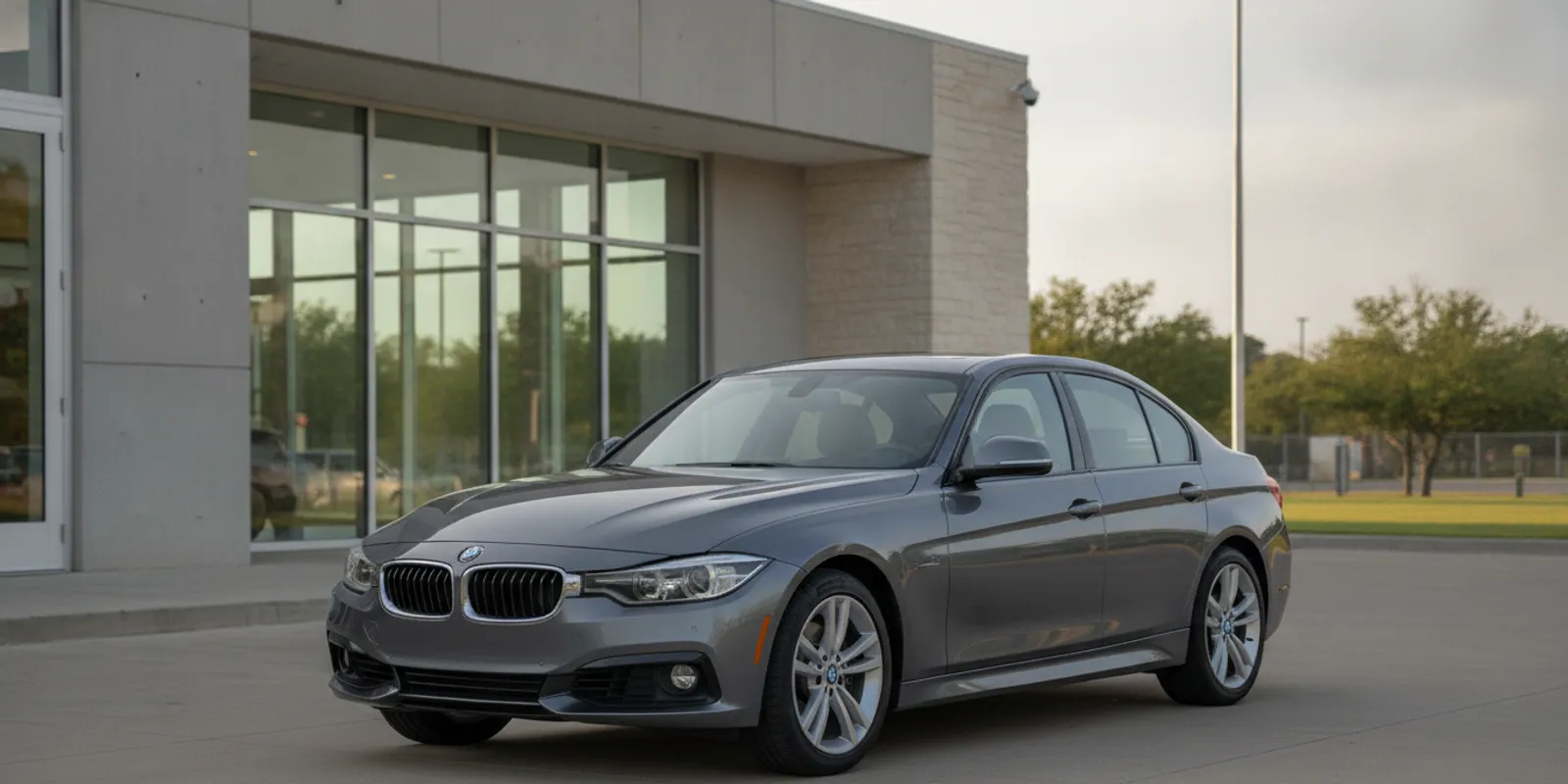
A pre-owned BMW 330e can deliver the familiar feel of a 3 Series with the option to drive short trips on electricity, then rely on gasoline for longer travel. For DFW shoppers, the key is matching the model year and charging routine to daily driving; Auto Web Expo is in Plano at 4041 West Plano Parkway, and the team can be reached at (469) 626-0777.
See available BMW 3 Series vehicles and ask about a 330e
What makes the BMW 330e different?
The BMW 330e is a plug-in hybrid electric vehicle, or PHEV. It combines a gasoline engine with an electric motor and a battery that can be charged from an external power source. That distinguishes it from a conventional BMW 330i, which uses a gasoline engine without a plug-in battery, and from a fully electric BMW i model, which has no gasoline engine.
When its battery has usable charge, a 330e can cover some local driving using electric power. When conditions call for more power, the system can combine the engine and electric motor. The gasoline engine also means a driver can continue a trip without locating a charger. Actual operating behavior depends on the model year, battery charge, selected drive mode, temperature, speed, and other conditions.
That flexibility can suit a driver who has a reliable place to plug in at home or work but still wants a gasoline backup for longer drives. A shopper without regular charging access may still value the hybrid system, but should compare how often they expect to charge with the added complexity of a plug-in vehicle.
How do BMW 330e model years compare?
In the U.S., the 330e name has appeared in more than one 3 Series generation, with a gap between earlier and later versions. Model-year features, battery specifications, available equipment, and drivetrain choices are not interchangeable. Use the VIN and original window label to confirm the identity of a specific car rather than relying on a general model description.
| U.S. model-year group | Generation context | What to confirm |
|---|---|---|
| 2016–2018 | Earlier 3 Series generation (F30) plug-in hybrid | Battery and charging history, vehicle condition, included equipment, and any remaining coverage |
| 2019–2020 | No U.S. 330e model-year examples in the usual retail lineup | Check the VIN carefully if a listing labels a car as a 330e |
| 2021 and later examples | Later 3 Series generation (G20) plug-in hybrid | Exact model year, rear-wheel drive or xDrive configuration where offered, packages, and current battery range estimate |
The year groups are a starting point, not a substitute for checking an individual vehicle. A model-year transition can affect equipment and technical details, and availability may differ between countries. Review the VIN, vehicle history, window sticker when available, and BMW owner documentation for the specific car.
Some later 330e model years were offered with xDrive all-wheel drive in addition to rear-wheel drive. Availability varies by year, so do not assume every 330e has the same drivetrain. If winter traction is a priority, verify the actual configuration and remember that tires, road conditions, and driving technique remain important.
What should you know about charging and electric range?
A 330e is designed to be charged from an AC power source. Depending on the car and its included equipment, owners typically use a household outlet or a dedicated Level 2 charging station. Charging times differ with the electrical supply, charger, vehicle equipment, and battery state. Confirm the charging connector, cable, and charging capability for the exact model year before buying.
Do not treat the advertised electric range as a guaranteed daily distance. The EPA-rated range is a standardized comparison figure, while the range shown in a specific car can change with temperature, cabin heating or cooling, speed, terrain, battery condition, and driving style. Highway speeds and very hot or cold weather can reduce the distance available from a charge. Ask for the original EPA label or other model-year-specific documentation, and compare it with the car's current charge display during a test drive.
When comparing two model years, use the same kind of range figure for each: the official electric-only estimate for the exact year and configuration. Do not compare one car's estimate on a fully charged battery with another car's remaining-range display after a drive. The dashboard estimate is a prediction based on recent use, not a battery-health certificate. It can move up or down as driving conditions change, so treat it as context rather than a pass-or-fail test.
A useful test-drive routine is to inspect the charge level before departure, use a familiar route with both slower streets and faster traffic, and note how the system behaves as charge changes. Do not expect a short demonstration drive to establish the battery's full capacity. Ask for a qualified inspection if the displayed range seems inconsistent with the model-year rating or if warning messages appear. For a purchase decision, documented diagnostics and warranty status carry more weight than a single estimated-range number.
Think through your regular routes before deciding whether the plug-in system fits:
- Home charging: Identify where the car will park and whether a standard outlet is practical or a Level 2 installation makes more sense. If you rent or share parking, confirm permission and access first.
- Daily distance: Compare the commute and routine errands with the model-year range rating, leaving a buffer for weather, traffic, and detours.
- Long trips: Consider whether you are comfortable using gasoline for longer drives and charging when convenient rather than planning every stop around a charger.
- Charging equipment: Ask which cables or accessories come with the vehicle. Do not assume a used car includes every original charging item.
A plug-in hybrid is not the same as a full electric vehicle for charging. The 330e can use its gasoline engine when needed, and it is not a car to shop for on the assumption that DC fast charging will be available. Verify the charging method in the owner's manual for the exact vehicle.
How does it drive compared with other 3 Series models?
The 330e retains the compact-sedan layout and driver-focused character associated with the 3 Series, while its hybrid system adds another layer to how power is delivered. With charge available, electric propulsion can make low-speed trips feel smooth and quiet. When the engine starts or the system blends power sources, the experience differs from a conventional 330i. Drivers should try the transitions themselves rather than judging from a specification sheet.
The battery and electrified components also affect packaging and vehicle weight compared with a non-plug-in 3 Series. The feel can vary with tire choice, drivetrain, model year, and equipment. During a test drive, include stop-and-go streets, a faster road, and a safe opportunity to accelerate. Listen for unusual noises, note how the engine starts, and observe whether the battery and drive-mode displays behave normally.
For a broader selection of BMW sedans, compare the car with the current BMW inventory. If you are also considering another luxury make, the dealership's pre-owned Mercedes-Benz selection can help frame the alternatives.
Which equipment and configuration should you look for?
Do not assume that every 330e has the same cabin features or driver-assistance equipment. BMW equipment can depend on model year, original configuration, and packages. Check the car itself and its original build information for the details that matter most to you, such as seat adjustment, heated features, navigation, audio, parking assistance, and active safety systems.
For an efficient comparison, make a short list before visiting:
- Confirm the model year, body style, drivetrain, and mileage from the vehicle record.
- Identify must-have comfort and safety features, then verify each one in person.
- Check that both charging and gasoline operation are acceptable for your routine.
- Compare tire condition and size, as replacement needs can affect near-term ownership costs.
- Review the vehicle history and ask what inspection or reconditioning records are available.
Equipment labels can also create confusion: 330e identifies the plug-in hybrid version, but it does not by itself tell you every package or feature installed. Use the VIN-specific configuration and a physical walkthrough instead of inferring equipment from badges or photographs.
What should you inspect before buying a used 330e?
Start with a cold-start and a close review of the vehicle's records. Ask whether the car has been routinely charged, whether any hybrid-system warning has appeared, and whether diagnostic or repair records are available. A seller may not know every detail of a prior owner's charging routine, so treat documented history and an independent inspection as more useful than an informal estimate of battery condition.
During the inspection and drive, check the following:
- Charging connection: Look for damage, corrosion, or loose fit around the charging port. If possible, confirm the vehicle accepts a charge using compatible equipment.
- Dashboard messages: Review warnings before and after driving. Ask for an explanation and supporting repair documentation for any hybrid, battery, or drivetrain alert.
- Drive modes: Test the available modes and note any unexpected changes in propulsion, braking, or engine operation.
- Brakes and tires: Inspect wear and ask about replacement history. Regenerative braking can change how the friction brakes are used, but it does not eliminate the need to check them.
- Cabin and electronics: Test climate control, displays, cameras, driver assistance, and the features you expect to use every day.
- Records: Review the vehicle history and available repair, inspection, and reconditioning documents.
Because a PHEV includes both conventional and high-voltage systems, a qualified inspection should address more than the engine and tires. Ask what checks are included and whether additional diagnostics by a BMW-qualified technician are appropriate. Auto Web Expo offers vehicle service and repair information; confirm directly which inspection work is available for a particular car.
What warranty questions matter for a pre-owned BMW 330e?
Never assume that a used 330e still has factory coverage simply because it is a recent model year or has relatively low mileage. Warranty start dates, mileage limits, exclusions, prior repairs, and ownership history can all affect what remains. High-voltage battery coverage may have terms that differ from the basic vehicle warranty, and terms can depend on the vehicle and applicable jurisdiction.
Before purchase, request the VIN-specific warranty status from an authorized BMW source and review the applicable warranty booklet. Ask these questions:
- When did the original in-service date begin, and which vehicle warranties remain active?
- What are the exact time and mileage limits for the high-voltage battery and hybrid components?
- Are there regional or emissions-related coverage provisions that apply to this VIN?
- Do the vehicle history or service records show repairs that could affect future coverage?
- What diagnostic information or inspection documentation is available for the battery system?
Get answers in writing where possible. A general statement that a battery is “under warranty” is not enough; ask which component is covered, until what date or mileage, and under what conditions. If coverage has expired, factor that uncertainty into your ownership decision without assuming a particular repair cost.
How can DFW buyers compare ownership fit?
North Texas driving can combine short local errands, busy commutes, and longer highway trips. A 330e can make sense when the owner can charge regularly and most routine trips fit comfortably within the car's electric capability. It may be less compelling if charging is inconvenient or if nearly all driving is at sustained highway speed. The gasoline engine provides flexibility, but it does not remove the value of understanding the hybrid system before purchase.
Compare the likely routine, not an idealized one. Estimate how many days each week you can plug in, how often you make trips outside the metro area, and whether your home electrical setup can support charging. Consider where the car will be parked overnight, who controls access to an outlet, and whether a charging cable can be stored safely without crossing a walkway. If you expect to rely on a public charger, check the locations and access rules you would actually use rather than assuming one will be available whenever needed.
Also compare the 330e with a conventional 3 Series based on your own driving, not just the powertrain label. The plug-in version adds charging hardware and a high-voltage battery, so condition, service records, and coverage deserve particular attention. A buyer who charges regularly and makes many short trips may use the electric capability more often; one who rarely plugs in may carry that system without using its main daily advantage. Neither pattern is automatically right or wrong, but it should be an intentional choice.
Then test the specific vehicle and check its current equipment and condition. For shoppers comparing financing options alongside vehicle selection, Auto Web Expo provides financing information and an online pre-approval option.
Inventory changes, so a general model page may not show a 330e at every visit. Browse the pre-owned inventory in Plano and ask the team to confirm current availability, model year, and vehicle details before making plans. You can also contact Auto Web Expo with a specific question about a listing.
Compare BMW 3 Series listings and arrange a test drive at 4041 West Plano Parkway, Plano, TX 75093
Frequently Asked Questions
Is the BMW 330e fully electric?
No. It is a plug-in hybrid with both an electric motor and a gasoline engine. It can drive on electric power in suitable conditions when charge is available, but it can also use gasoline.
Can I charge a BMW 330e from a household outlet?
Many 330e configurations support AC charging from a standard household outlet, though charging speed and included equipment vary. Confirm the exact car's requirements and cable availability in its owner's manual before relying on a particular setup.
How far can a used BMW 330e drive on electricity?
Electric range depends on model year and the car's condition. The official rating is a useful comparison point, but temperature, speed, terrain, climate-control use, and battery condition can change the range you see. Check the correct model-year documentation and the vehicle's charge display.
Does every BMW 330e have xDrive?
No. Drivetrain availability depends on model year and configuration. Confirm whether a particular car is rear-wheel drive or xDrive by checking its VIN-specific details and vehicle documentation.
How can I confirm the battery warranty?
Ask an authorized BMW source to check coverage using the vehicle identification number, then review the applicable warranty booklet. Confirm the dates, mileage limits, covered components, and any regional terms rather than relying on a general description.
A careful review of the model year, charging fit, vehicle condition, and VIN-specific warranty terms can help you choose a BMW 330e that suits your daily driving in the Dallas-Fort Worth area.