
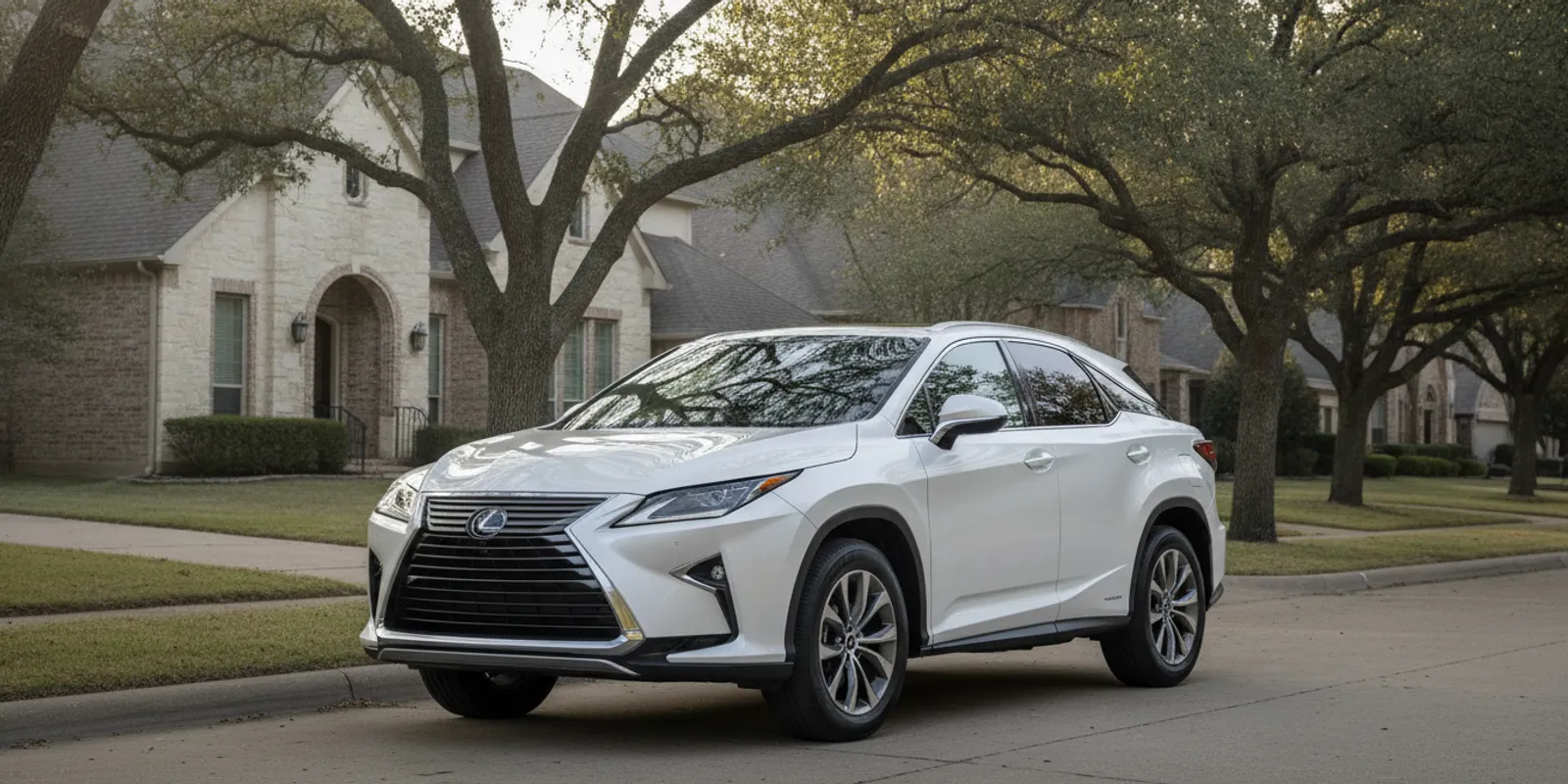
A pre-owned Lexus RX 350 hybrid can pair a quiet, comfortable luxury-SUV cabin with a gasoline-electric powertrain designed to use less fuel than a comparable conventional model. If you are researching a Lexus RX 350 hybrid in DFW, start by checking the exact badge: recent vehicles are called the RX 350h, while older hybrid RX models may be listed as RX 450h. Auto Web Expo is at 4041 West Plano Parkway, Plano, TX 75093; call (469) 626-0777 with questions about a specific vehicle.
See pre-owned luxury SUV inventory and ask our team about a Lexus RX hybrid.
What does “Lexus RX 350 hybrid” mean?
For the current-generation RX introduced for the 2023 model year, the hybrid version is badged RX 350h. The “h” identifies the hybrid model. It is not the same powertrain as the standard RX 350, which uses a gasoline engine without the RX 350h hybrid system.
The RX 350h is a conventional, non-plug-in hybrid. Its gasoline engine and electric motor work together, and the vehicle manages the battery during normal driving. You do not plug it into a charger. That makes it different from a plug-in hybrid, which has a larger rechargeable battery and a charging port, and from a fully electric vehicle, which runs on electricity alone.
Model-year and badge details matter when you shop used. The earlier-generation RX hybrid was generally called the RX 450h; it should not be assumed to have the same engine, equipment, or driving character as a newer RX 350h just because both are hybrid RX SUVs. The regular RX 350 is another distinct model. Confirm the year, full model designation, and trim on the vehicle listing and its identification label rather than relying on a shortened search phrase.
| Model designation | What it means | What to confirm |
|---|---|---|
| RX 350h | Current-generation RX hybrid designation, introduced for 2023; conventional hybrid, not plug-in. | Year, trim, equipment, drivetrain, service records, and warranty details for the specific vehicle. |
| RX 350 | Gasoline RX model without the RX 350h hybrid powertrain. | Engine and drivetrain listed for that year, plus whether its equipment meets your needs. |
| RX 450h | Hybrid designation used on earlier-generation RX models. | Exact model year and generation; do not transfer RX 350h specifications to it. |
This distinction is useful when comparing search results, insurance quotes, vehicle history, or service information. Search terminology can be imprecise, but the listing’s exact model badge and year identify which vehicle you are evaluating. When asking about a listing, include the full designation and model year in your message. That keeps questions about equipment, warranty, and service tied to the right generation instead of blending details from different RX models.
How does the RX 350h hybrid system work?
The RX 350h combines a 2.5-liter four-cylinder gasoline engine with electric motor assistance and a hybrid battery. For the 2023 RX 350h, Lexus lists a combined system output of 246 horsepower and an electronically controlled continuously variable transmission. The system coordinates gasoline and electric power automatically, so there is no clutch pedal or driver-operated shift plan for switching between the power sources.
During low-speed driving and some light-load conditions, the system can use electric power; when more power is needed, the gasoline engine joins in. It also captures some energy during deceleration to recharge the hybrid battery. Conditions such as temperature, road grade, speed, acceleration, tire pressure, and load affect how often the engine runs and the fuel economy you see. A hybrid badge is not a guarantee of a particular result on every DFW commute.
The RX 350h is designed for buyers who want the ease of a gasoline vehicle with hybrid assistance. You refuel it at a gas station and do not need to plan trips around charging stops. A home charger is not needed. If plug-in charging or extended electric-only driving is a priority, compare plug-in or fully electric models separately; the RX 350h is not a plug-in vehicle.
It helps to understand what the hybrid system does not ask you to do. There is no need to select an electric mode for ordinary operation or to change your driving routine around a charging schedule. Your part is to drive smoothly, follow the vehicle’s maintenance schedule, and pay attention to warning messages. The system handles the blending of engine and motor power on its own. On a used vehicle, the more relevant shopping questions are how the system behaves on a drive, whether warning indicators are present, and what the service history shows.
What efficiency and driving differences should you expect?
Hybrid assistance can be especially useful in traffic with frequent slowing and acceleration, where energy recovery and electric-motor support may reduce gasoline use compared with a similar non-hybrid vehicle. The system can also make power delivery feel smooth at low speeds. On a steady highway drive, the gasoline engine may do more of the work, so the advantage depends on the route and conditions.
Do not compare two vehicles using a single fuel-economy number without checking their exact model year, configuration, and official rating. Wheel size, drivetrain, maintenance condition, and driving habits can all affect real-world results. Check the rating for the specific model year you are considering, then use it as a comparison point rather than a promise about your own mileage.
On a test drive, notice how the RX responds when pulling away from a stop, merging, and slowing to a stop. The transition between engine and electric assistance should feel controlled, not accompanied by warning lights, unusual vibration, or repeated harsh surges. A brief route through both local streets and faster traffic can help you assess the ride, visibility, braking feel, and cabin noise in conditions closer to your daily use.
Think about your own regular route, too. A driver who spends much of the week in slow traffic may value hybrid assistance differently from someone whose commute is mostly open highway. Include errands, school runs, and weekend trips in your estimate rather than judging the vehicle from one short test drive. If possible, drive the RX when it is fully warmed up and note how it behaves at different speeds. This gives you a more useful basis for comparison than expecting the hybrid system to operate in one fixed way.
For a practical comparison, write down the driving you expect to do in a typical week. Separate stop-and-go trips, short errands, and longer highway stretches. Then ask whether the RX 350h’s non-plug-in format matches those patterns, rather than assuming every hybrid will deliver the same result. When you drive, use the same route in each vehicle you are comparing and keep the cabin settings similar. That will not create a laboratory test, but it can make differences in ride, visibility, acceleration, and noise easier to notice.
Also consider how you want the SUV to feel in daily use. In town, a smooth launch and calm cabin may matter more than a brief acceleration run. On the highway, evaluate how easily the vehicle settles at your usual speeds and whether the seats and controls remain comfortable. Pay attention to braking at low speeds, parking maneuverability, and whether the view from the driver’s seat suits you. A short, deliberate checklist is more useful than relying on a vague impression after returning to the lot.
Which RX 350h trim should you consider?
Trim names and available equipment can vary by model year and by the vehicle’s original configuration. Recent RX 350h listings may use names such as Premium, Premium+, and Luxury. Treat those names as a starting point, not a complete equipment list: verify the individual vehicle’s window sticker or listing details to see which comfort, convenience, safety, and interior features are actually included.
- Premium: A sensible place to begin if you want the RX 350h powertrain and core luxury-SUV experience. Confirm the exact seating, display, driver-assistance, and convenience equipment on that year’s vehicle.
- Premium+: A higher equipment grouping on applicable model years. Compare the listed additions with features you will use regularly instead of assuming the trim name guarantees a particular option.
- Luxury: A more richly equipped configuration on applicable years. Check the actual cabin materials, seat features, wheels, and technology package on the specific vehicle.
When comparing two RX 350h vehicles, write down the year, trim, mileage, drivetrain, listed options, and condition. Then compare the same items line by line. A well-kept vehicle with the right equipment for your routine may be a better fit than a higher trim whose added features you will rarely use. Browse pre-owned luxury vehicles available in Plano and review each listing for its exact model information.
Build a feature checklist before you visit so the trim name does not make the decision for you. Start with items you use every day, such as seat adjustment, climate controls, phone connection, visibility aids, and the layout of the central display. Then list occasional preferences, such as a particular interior finish or wheel style. When looking at a specific RX, operate the equipment rather than assuming it works because it appears in a feature list. If a listing is unclear, ask for confirmation of the installed options and compare those details with the vehicle itself.
It can also help to compare two similarly equipped vehicles rather than a base example and a top trim with different mileage or condition. Keep the model year, drivetrain, and major options visible in your notes. If one vehicle has a feature you value but a less complete record, put both facts on the same page. This makes trade-offs clear and helps prevent a trim label from overshadowing more important questions about condition, service, and fit.
What should DFW buyers inspect before choosing a used RX 350h?
A used hybrid deserves the same careful review as any luxury vehicle, plus attention to its hybrid system and maintenance history. Begin with the vehicle’s paperwork and condition, then arrange a professional inspection if you are considering a purchase. A test drive is valuable, but it cannot replace a review of service records or a qualified inspection.
- Confirm identity and configuration. Match the model year, RX 350h badge, trim, drivetrain, and vehicle identification number across the listing and paperwork. Make sure you are not comparing it with an RX 350 or an older RX 450h by mistake.
- Review maintenance and ownership records. Look for regular service documentation and ask whether any warning lights, drivability concerns, or hybrid-system repairs have occurred. Records help establish what was done; missing records are a reason to ask more questions, not proof of a defect.
- Check the tires and brakes. Look for even tire wear, suitable tread, and any visible damage. During the drive, pay attention to steering pull, vibration, brake response, and unusual noises. Hybrid regenerative braking can feel different from a conventional vehicle, but the pedal should still feel consistent and predictable.
- Inspect the cabin and electronics. Test the climate controls, display, cameras, audio, power seats, liftgate, and other equipment fitted to that vehicle. Confirm that safety alerts and dashboard indicators behave normally at start-up and during the drive.
- Look over the exterior and underbody. Check for inconsistent panel gaps, paint differences, glass damage, wheel damage, and signs of leaks or underbody impact. Review the vehicle-history information and ask about any reported collision or repair details.
- Ask for a hybrid-system assessment. Have a qualified technician inspect the hybrid components and scan for stored diagnostic codes. Ask the technician to explain any findings and the likely next steps before making a decision.
Warranty coverage is specific to the vehicle’s year, original in-service date, mileage, and applicable terms. Do not assume that a hybrid-battery warranty is still active or that every RX hybrid has identical coverage. Ask for the coverage terms for the exact vehicle and verify eligibility with the appropriate source before counting a warranty as part of your buying decision.
For a more orderly inspection, work through the vehicle in the same sequence each time: documents first, exterior and tires next, cabin controls after that, then the road test. Record anything that needs clarification instead of trying to remember it later. Ask for the vehicle identification number and compare it across the paperwork and the vehicle. If the history report lists an event, request context and available repair documentation. The goal is not to diagnose the car in the parking lot; it is to identify questions a qualified inspector should answer before you commit.
DFW driving can mean everything from short neighborhood trips to long stretches of highway, so include the details that matter to your use. Check tire condition and pressure, look for even wear, and listen for wind or road noise at a steady speed. Test the air conditioning and other climate controls during the drive, and make sure all doors, windows, and the liftgate operate as expected. These simple checks do not replace a mechanical inspection, but they help you identify everyday concerns early and make the inspection request more specific.
Ask the seller for clear answers to specific questions: What maintenance records are available? Have any hybrid-system alerts appeared? Are there open concerns or repairs that should be documented? Is there information on the vehicle’s original warranty and present eligibility? A direct answer is more useful than a general assurance. Keep notes and have a technician assess anything you cannot verify yourself. Do not interpret the absence of a dashboard warning during one drive as proof that no diagnostic or service issue exists.
How should you compare an RX 350h with an RX 350?
First decide whether your priorities point toward hybrid efficiency or the non-hybrid RX 350’s different powertrain. The RX 350h can make sense for drivers who spend time in stop-and-go traffic and want a non-plug-in hybrid. The RX 350 may suit a shopper who prefers its specific engine response or finds a particular vehicle with the desired options and condition. Neither choice is automatically right for every DFW driver.
Compare the actual vehicles rather than the badges alone. For each one, note the year, miles, maintenance history, tire and brake condition, trim equipment, and asking price shown on its current listing. Then drive both if possible. Pay attention to cabin comfort, ease of parking, acceleration, visibility, and how the powertrain behaves on your regular types of roads.
It is also useful to compare the total ownership picture. Consider fuel use based on your routes, the equipment you value, insurance quotes, and the maintenance records for each vehicle. Make a simple side-by-side list before visiting: vehicle year and trim, mileage, available records, features you require, and questions that still need answers. Separate must-haves from preferences, such as a particular audio system or wheel design. That keeps the decision focused on fit and condition instead of letting a single feature dominate the comparison. For financing questions, review Auto Web Expo’s financing information and decide what monthly payment fits your budget before focusing on optional upgrades.
For the most meaningful comparison, compare vehicles with similar model years and condition whenever possible. If one vehicle has substantially different mileage or equipment, note that before judging its price or feel. On the road, repeat a few comparable tasks: pull away gently, accelerate to merge where safe, brake smoothly, and park in a familiar space. Afterward, compare how each cabin fits your passengers and how easy the controls are to use. A written note about the same items for both vehicles is more reliable than trying to remember every impression.
Think through your ownership priorities in order. If avoiding plug-in charging is important, the RX 350h’s conventional hybrid format may suit you. If a particular driving response or feature set matters more, make that the comparison point and check the exact model year’s configuration. Decide which factors are essential before reviewing listings: budget, seating comfort, mileage, service documentation, and must-have equipment. Then treat less important preferences as tie-breakers rather than letting them displace the basics.
Where can you get help with a pre-owned Lexus hybrid?
Auto Web Expo serves DFW luxury-vehicle shoppers from Plano and offers vehicle sales and service for brands including Lexus. If you have questions about a specific RX hybrid listing, contact the team with its model year and vehicle details so the discussion can focus on the exact configuration. For vehicle-care questions, review the Auto Web Expo vehicle service information and ask whether the service team can address your vehicle’s needs.
Bring your priorities to the conversation: preferred model year, must-have features, expected driving mix, and any questions about records or inspection results. That helps you compare a hybrid RX on its merits rather than relying on an unclear listing label. If you are still narrowing the field, identify whether you are looking for an RX 350h specifically or are also open to an RX 350 or older RX 450h. Clear terminology makes it easier to discuss the right vehicle.
Before a visit, save the listing and note the questions you want answered. Ask about the exact trim, the documentation available, and whether a particular feature is installed. If you plan to compare more than one vehicle, bring the same checklist for each. You can also review contact information for the Plano team and current pre-owned luxury inventory before deciding which listings merit a closer look.
Contact our Plano team to discuss a Lexus RX 350h and arrange a time to see a vehicle.
Frequently Asked Questions
Is the Lexus RX 350h the same as the RX 350 hybrid?
RX 350h is the official designation for the current-generation RX hybrid introduced for the 2023 model year. “RX 350 hybrid” is a common search phrase, but check the full badge and model year to distinguish it from the gasoline RX 350 and older RX 450h models.
Do you have to plug in a Lexus RX 350h?
No. The RX 350h is a conventional hybrid, not a plug-in hybrid. Its gasoline engine and hybrid system manage the battery during driving, so routine plug-in charging is not required.
Is an RX 350h more fuel-efficient than an RX 350?
The RX 350h is designed to use hybrid assistance to improve fuel efficiency, particularly in some stop-and-go driving. The exact comparison depends on model year, configuration, route, and driving conditions, so compare official figures for the precise vehicles and consider your own commute.
What does RX 350h trim mean?
Trim identifies an equipment grouping, and available names and features can change by year. Premium, Premium+, and Luxury are examples used on recent RX 350h models; check the specific vehicle’s listing or original equipment details rather than assuming every example has the same options.
What should I check before buying a used RX 350h?
Confirm the model year and trim, review maintenance and vehicle-history records, inspect tires and brakes, test the cabin electronics, and take a careful drive. Ask a qualified technician to assess the hybrid system and verify any warranty coverage for the individual vehicle.
A careful comparison of the badge, year, equipment, condition, and hybrid-system records can help you choose the RX that best fits your DFW driving needs.