
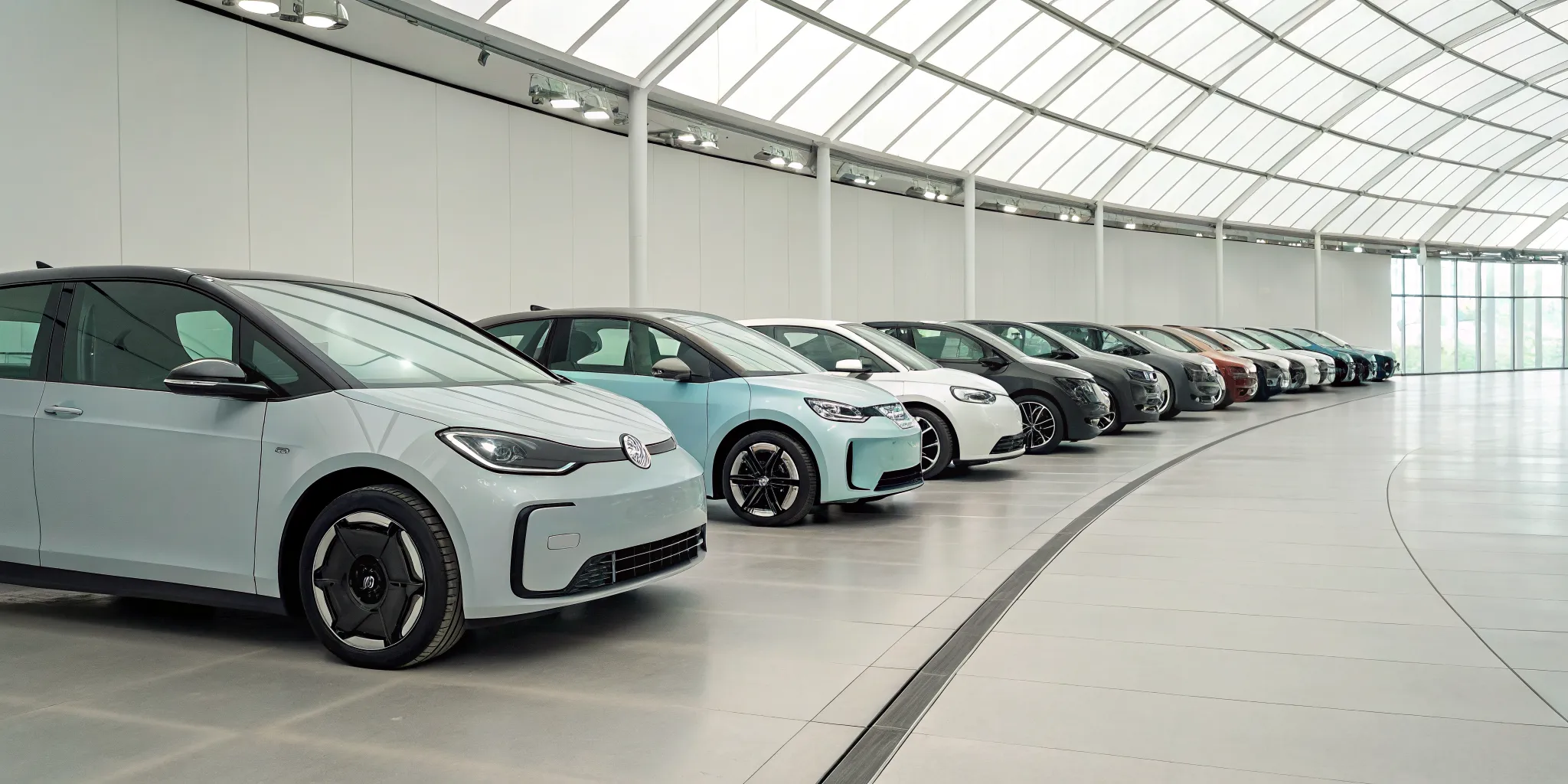
The idea of driving an electric car often brings to mind cutting-edge technology, instant acceleration, and a quiet, premium ride. For a long time, that experience came with a luxury price tag. That’s no longer the case. As more models enter the secondary market, you can now find vehicles from innovative brands like Tesla and BMW that are surprisingly affordable. This guide will show you how to find these high-value deals. We’ll explore how the market for cheap electric cars used offers a fantastic opportunity to get a sophisticated, tech-forward vehicle without the steep initial cost, proving that a smart purchase can also be an exciting one.
Key Takeaways
- Prioritize battery health over a low price: The most affordable EV isn't always the best deal. A car with a degraded battery can lead to expensive problems, so always confirm the battery's State of Health (SOH) to make sure you're getting real value.
- Calculate the total cost of ownership: Look beyond the sticker price to see the full financial picture. A used EV often costs less over time thanks to significant savings on fuel and maintenance, plus potential tax credits can make it an even smarter buy.
- Get a professional inspection and plan for charging: A pre-purchase inspection is essential for spotting potential issues and verifying the battery's condition. Also, figure out your home charging setup beforehand to ensure your new EV fits seamlessly into your daily routine.
What Defines a "Good" Cheap Electric Car?
Finding a great deal on a used electric car goes beyond just looking at the price tag. A truly "good" cheap EV is one that offers real value, reliability, and fits your lifestyle without surprise costs down the road. It’s about finding that sweet spot where affordability meets quality. To do that, you need to focus on three key areas: the battery's health, the car's driving range, and the total cost you'll pay over time. Thinking about these factors will help you find a dependable vehicle that saves you money for years to come.
Look Beyond the Sticker Price to Battery Health
Think of the battery as the heart of an electric car. Its health is the single most critical thing to check before you buy. A super-low price might be tempting, but it could be hiding a battery that’s nearing the end of its life, and a replacement can be expensive. The cheapest car on the lot isn't the best deal if it has a weak battery. It’s often smarter to spend a little more on a vehicle with a verified battery health report. This simple step can save you a major headache and a lot of money in the long run.
Match the Car's Range to Your Daily Drive
Before you fall in love with a specific model, think about your daily driving habits. Do you have a long commute from Plano to downtown Dallas, or do you mostly make short trips around Frisco? An older, shorter-range EV can be a fantastic and affordable option if you don't travel far. Most used EVs offer more than enough range for typical daily driving. The key is to be realistic about your needs. Don't pay for extra range you'll never use, but make sure the car you choose can comfortably handle your routine without giving you range anxiety.
Calculate Your Total Cost of Ownership
One of the best parts of owning an EV is the long-term savings. While the sticker price might be similar to a gas-powered car, your wallet will feel the difference every month. Electricity is much cheaper than gasoline, and maintenance is simpler and less frequent. EVs have fewer moving parts, which means no oil changes and less to break down. When you calculate the total cost of ownership, you’ll see that used EVs often cost less to run than their gas counterparts. You're not just buying a car; you're making a smart financial choice.
Our Top Picks: The Best Used EVs Under $20,000
Ready to find an electric car that fits your life and your budget? It’s easier than you might think. The used EV market is full of fantastic vehicles that deliver the perks of electric driving, like instant torque and zero emissions, without the brand-new sticker price. We’ve sorted through the options to find the most reliable and value-packed models you can find for under $20,000.
Whether you need a nimble car for zipping around Dallas, a practical crossover with room for weekend gear, or a taste of luxury for your daily commute, there’s a used EV on this list for you. We’re looking at everything from range and reliability to features and overall ownership costs. Think of this as your curated shortlist for finding a great pre-owned electric car that you’ll love to drive. Let’s get into our top picks.
Nissan Leaf (2013-2018)
The Nissan Leaf is one of the original pioneers of the modern EV movement, and its long history makes it an incredibly affordable entry point. For city drivers or anyone needing a reliable second car for errands and short commutes, the Leaf is a fantastic choice. You can often find models from this era for well under $10,000. While the range on these earlier models is modest, typically between 50 and 80 miles depending on the year and battery health, it’s more than enough for daily driving around town. The Leaf offers a comfortable ride and a surprisingly spacious interior, making it a practical and economical runabout.
Chevrolet Bolt EV (2017-2022)
If you need more range without breaking the bank, the Chevrolet Bolt EV is a game-changer. It was one of the first affordable EVs to offer over 200 miles on a single charge, making it a viable option for road trips and longer commutes. With prices for used models falling between $12,000 and $17,000, the Bolt delivers incredible value. It’s fun to drive, with peppy acceleration and a roomy, hatchback design. One important note: many of these models were part of a major battery recall. Before you buy, you should confirm with the dealer or by checking the VIN that the battery has been replaced or the software fix has been completed.
Hyundai Kona Electric
For those who prefer the style and practicality of a compact SUV, the Hyundai Kona Electric is a standout choice. It combines a sharp design with an impressive range that often exceeds 250 miles, making it one of the most versatile EVs in this price range. You can typically find used models for between $13,000 and $18,000. The Kona Electric is known for its user-friendly tech, comfortable cabin, and enjoyable driving dynamics. It’s a great all-arounder that feels just as at home on the highway as it does navigating Plano traffic, offering a complete package for drivers who want it all.
BMW i3
Want an EV that truly stands out from the crowd? The BMW i3 is your answer. With its unique carbon-fiber construction, futuristic styling, and upscale interior made from sustainable materials, the i3 offers a premium experience for a budget-friendly price, often between $6,000 and $14,000. Its shorter range makes it best suited for city life, but it’s one of the most engaging and fun-to-drive city cars out there. Some models also come with a small gasoline-powered Range Extender (REx), which kicks in to charge the battery and eliminate range anxiety. It’s a perfect choice for the style-conscious driver looking for a luxury EV experience.
Kia Niro EV
The Kia Niro EV is the sensible, do-it-all option that checks all the right boxes. It offers a fantastic range of over 230 miles, a spacious and practical crossover body, and a long list of standard features. It’s the kind of car that seamlessly fits into your life without any compromises. Used prices generally fall between $12,000 and $20,000, offering excellent value for a relatively modern EV. The Niro EV is praised for its smooth ride, intuitive infotainment system, and overall reliability. If you’re looking for a low-drama, high-function electric vehicle that can handle everything from the school run to a weekend getaway, the Niro EV is a top contender.
Tesla Model 3 (Older Models)
Yes, you can get a Tesla for under (or around) $20,000. Older, higher-mileage Model 3s from 2017-2021 are starting to enter this price bracket, making them an attainable option for many buyers. For your money, you get access to Tesla’s sleek minimalist design, impressive performance, and the unmatched convenience of the Supercharger network for long-distance travel. When shopping for a used Model 3, pay close attention to the battery health and overall condition, as repair costs can be higher than other brands. For those willing to push their budget slightly, the Model 3 offers a tech-forward driving experience that’s hard to beat.
Your Used EV Inspection Checklist
When you’re looking at a used electric vehicle, the inspection process is a bit different than for a traditional gas-powered car. It’s not more difficult, just different. Knowing what to look for will help you feel confident and in control, ensuring you drive away in a vehicle that’s reliable and ready for the road ahead. Think of this checklist as your guide to making a smart investment. By taking the time to look at these key areas, you can avoid common pitfalls and find a pre-owned EV that you’ll love for years to come. It’s all about making sure there are no expensive surprises waiting for you down the line.
Assess the Battery's Health
The battery is the heart of any EV, making its condition the single most important factor to evaluate. You’re looking for its State of Health (SOH), which measures its ability to hold a charge over the long term, not just its current charge level. A brand-new EV has 100% SOH, and this number naturally decreases over time. Most EVs display this percentage in the dashboard settings menu. A lower SOH means less driving range. Since the battery is the most expensive component, understanding EV battery health is crucial; a great price on a car with a degraded battery isn’t a great deal at all.
Inspect the Charging Port and Equipment
Next, take a close look at the vehicle’s charging port. Check for any signs of physical damage, like bent pins, cracks, or burn marks, which could indicate issues with charging. You should also confirm that all the necessary charging equipment is included with the car. At a minimum, it should come with a Level 1 mobile charging cable that plugs into a standard wall outlet. These cables can be expensive to replace, so making sure it’s in the trunk before you sign the paperwork can save you a few hundred dollars and a headache.
Check for Warranty Coverage and Recalls
One of the biggest advantages of buying a used EV is that it may still be under the manufacturer’s original warranty. Federal law mandates that EV batteries are covered for at least eight years or 100,000 miles. This warranty often covers excessive degradation, meaning the manufacturer will replace the battery if its health drops below a certain percentage (typically 70%) within the warranty period. It’s also a smart move to use the car’s Vehicle Identification Number (VIN) to check for any outstanding recalls on the National Highway Traffic Safety Administration website. This is a free and easy way to ensure the car is safe and up-to-date.
Perform a Thorough Test Drive and Inspection
Finally, it’s time for a comprehensive test drive. Try to drive the car in various conditions, from slow city traffic to highway speeds. Pay close attention to how the car accelerates and brakes. Test the regenerative braking system; it should engage smoothly when you lift your foot off the accelerator. Listen carefully for any unusual humming or whining noises from the electric motor. While the ride should be quiet, strange sounds can signal a problem. Don’t forget to do a standard vehicle inspection, too, checking the tires, brakes, lights, and all the interior electronics to make sure everything works as it should.
Used EV vs. Gas Car: Which Costs More Over Time?
When you’re comparing a used electric car to a similar gas-powered one, the sticker price is only the beginning of the story. To get a true picture of what you’ll spend, you need to look at the total cost of ownership. This includes everything from fuel and maintenance to insurance and potential tax credits. It’s easy to get focused on the initial purchase price, but the long-term expenses are where you’ll often find the biggest differences between an EV and a traditional car.
Even if the upfront cost for a used EV is slightly higher than a comparable gas model, you might be surprised by how quickly the savings add up. Think about it: you’re swapping weekly trips to the gas station for charging at home, and you’re saying goodbye to routine maintenance like oil changes. Over several years, these savings can make a significant impact on your budget. We’ll break down exactly where you can expect to save money and what other costs you should keep in mind as you weigh your options. This way, you can make a decision that feels right not just today, but for years to come.
Breaking Down Your Fuel Savings
One of the most immediate financial perks of switching to an EV is the money you'll save on fuel. Even if the sticker price is similar to a gas car, used EVs save you money every month because electricity is cheaper than gasoline. Instead of watching the numbers climb at the pump, you’ll be charging your car at home overnight for a fraction of the cost. The U.S. Department of Energy even has a tool to help you compare fueling costs in your area. For most drivers in the DFW area, the difference is substantial. Those daily commutes and weekend trips start to feel a lot more affordable when you’re not constantly budgeting for gas.
Comparing Maintenance Costs
Electric vehicles have far fewer moving parts than their gas-powered counterparts, which means less maintenance and fewer potential repair bills. You can forget about oil changes, spark plug replacements, and exhaust system repairs. According to Edmunds, "Used electric cars need less maintenance than gas-engine cars," which often means they are in better overall condition. While you’ll still need to take care of basics like tires, brakes, and cabin air filters, you’re eliminating some of the most common and costly service appointments associated with traditional vehicles. This mechanical simplicity not only saves you money but also gives you more time on the road and less time in the shop.
What to Expect for Insurance and Registration
While you’ll save on fuel and maintenance, it’s smart to get an insurance quote before you buy. Sometimes, insuring an EV can be slightly more expensive due to specialized repair costs, but rates are becoming more competitive. You should also be aware of registration fees. Here in Texas, EV owners pay an extra annual fee to help offset lost revenue from gas taxes. On the plus side, many used electric cars will still be under their original manufacturer's warranty. It’s important to read the fine print, as most battery coverage runs for eight years or 100,000 miles, which can provide valuable peace of mind.
Don't Forget Tax Credits and Incentives
A major financial benefit of buying a used EV is the potential for a federal tax credit. Depending on the vehicle's price and your income, you could qualify for the Used Clean Vehicle Credit, which can put up to $4,000 back in your pocket. This incentive can make an already affordable EV an even better deal. And if you’re worried about the battery, know that complete failures are rare. The EPA notes that battery replacements due to failure average just 2.5% outside of major recalls. This means you can confidently claim your tax credit without worrying about a massive repair bill wiping out your savings.
Where to Find Quality Used EVs in DFW
Finding the right used electric vehicle in the Dallas-Fort Worth area is easier than you might think. The market is full of great options, but knowing where to look is key to getting a reliable car at a fair price. From certified programs that offer extra assurance to local dealerships where you can get behind the wheel, here are the best places to start your search for a quality pre-owned EV.
Explore Certified Pre-Owned (CPO) Programs
If you’re looking for extra peace of mind, Certified Pre-Owned (CPO) programs are a fantastic starting point. These programs, offered by manufacturers, require vehicles to pass a rigorous multi-point inspection before they can be certified. A huge benefit is that many of these used EVs are still under their original factory warranty. It’s important to know the details when buying a used electric car, especially that most battery coverage lasts for eight years or 100,000 miles from the original purchase date. Always read the fine print on the CPO warranty to understand exactly what’s covered.
Browse Online Marketplaces
For sheer volume and variety, online marketplaces are hard to beat. Websites like CarGurus and Autotrader let you browse a massive inventory from the comfort of your home. You can easily filter your search by make, model, price, mileage, and even specific features you want in an EV. These platforms gather listings from dealerships and private sellers across the DFW area, giving you a comprehensive view of what’s available. This makes it simple to compare different vehicles and find an affordable electric car that fits your budget without spending weeks driving all over town.
Visit Local DFW Dealerships
Sometimes, nothing beats seeing a car in person. Visiting a local dealership allows you to inspect the vehicle up close, take it for a test drive, and ask questions directly. Reputable dealerships in the DFW area, like Auto Web Expo, thoroughly inspect each vehicle to ensure it meets high standards for quality and reliability. This can save you from potential headaches down the road. Plus, you get to build a relationship with a local team that can help with financing and service long after your purchase. Exploring a curated inventory of pre-owned vehicles is a great way to find a quality EV you can trust.
Common Mistakes to Avoid When Buying a Used EV
Buying your first used EV is exciting, but it's easy to get tripped up by a few common mistakes. A little preparation can save you from major headaches down the road. Think of me as your car-savvy friend who’s here to point out the potential pitfalls so you can drive away in a car you truly love. Let’s walk through the four biggest mistakes to sidestep during your search.
Ignoring Quality for a Low Price
It’s so tempting to jump on the lowest price you see, but that amazing deal might not be so amazing after all. The cheapest EV on the lot could be hiding expensive problems, like a rapidly degrading battery or missing charging equipment. A slightly higher price for a vehicle with a verified service history and excellent battery health will almost always save you money in the long run. Instead of focusing only on the sticker price, think about the overall value. A well-maintained car from a reputable dealership gives you peace of mind that’s worth far more than a few hundred dollars saved upfront.
Overlooking Signs of Battery Degradation
The battery is the single most important (and expensive) component of any electric vehicle. All batteries lose some capacity over time, which is called degradation, but how the previous owner cared for the car makes a huge difference. A cheap EV with a weak battery can turn into a very costly problem. Ask for a "State of Health" (SoH) report, which shows how much of the original capacity the battery still holds. A good sign is a previous owner who followed the 20-80% rule, keeping the charge between 20% and 80% to preserve long-term battery life. Don't let a low price distract you from this crucial detail.
Forgetting About Your Home Charging Setup
Before you bring your new EV home, you need a plan for how you’ll charge it. While you can use a standard 120-volt wall outlet (Level 1 charging), it’s very slow and might not be practical for your daily driving needs. Most EV owners find that installing a 240-volt outlet for Level 2 charging is the best solution for overnight charging. Think about your garage or parking situation and factor in the potential cost of having an electrician install a faster charger. Also, confirm the car comes with its charging cables and supports DC fast charging if you plan on taking road trips around Texas and beyond.
Skipping a Professional Inspection
Even though EVs have fewer mechanical parts than gas cars, they aren't maintenance-free. Components like brakes, tires, suspension, and cooling systems still need to be in top shape. This is why a pre-purchase inspection is non-negotiable. A qualified technician can spot issues you might miss and run a diagnostic to get that all-important battery State of Health (SoH) report. This gives you a clear picture of the car's condition and helps you avoid any unwelcome surprises. At Auto Web Expo, our service center thoroughly inspects every vehicle, so you can buy with confidence knowing it’s been checked from top to bottom.
Setting Your Budget for a Used Electric Car
Figuring out your budget is the first real step toward getting behind the wheel of a new-to-you car. When it comes to used electric vehicles, the math is a little different than with a traditional gas car. You’ll want to look at the initial price tag, of course, but it’s also smart to consider potential future costs and the exciting long-term savings that come with going electric. Thinking through these three areas will give you a complete picture of what you can comfortably afford and help you find the perfect EV for your life in Dallas-Fort Worth.
Typical Price Ranges for Popular Models
The great news for anyone shopping for a used EV is that prices have become much more accessible. You can find reliable, efficient models that fit a variety of budgets. For a solid city car, older Nissan Leaf models (from 2013–2018) often fall in the $5,000 to $9,000 range. If you need a bit more range and modern features, you can find a Chevy Bolt EV for around $12,000 to $17,000. Another popular option, the Hyundai Kona Electric, typically lands between $13,000 and $18,000. These price points show that there are plenty of cheap used electric cars available that don't compromise on quality.
Factor in Additional Costs and Fees
The sticker price is just the starting line. With any used car, you’ll have taxes, title, and registration fees. For an EV, it’s also wise to set aside some funds for potential battery-related expenses. While EV batteries are built to last, a future repair or replacement can be a significant cost. It’s better to be prepared for this possibility, even if you never need it. Understanding what to look for in a used EV, including its battery health, can help you anticipate these costs and build a budget that covers every angle, preventing any financial surprises down the road.
Calculate Your Potential Long-Term Savings
Here’s where budgeting for an EV gets fun. While the purchase price might be similar to a gas-powered car, your monthly expenses will likely be much lower. Electricity is generally cheaper than gasoline, so you’ll save money every time you charge up instead of filling up. EVs also have fewer moving parts than traditional engines, which means less maintenance and fewer repair bills. Think no more oil changes. These long-term savings on fuel and upkeep can add up quickly, often offsetting a good portion of your monthly car payment and making an EV a very smart financial choice.
How to Finance Your Used EV
Getting the keys to your pre-owned EV is exciting, and figuring out the financing should be just as straightforward. The process is very similar to financing any other car, but with a few extra opportunities to save money that you won't want to miss. Thinking through your loan options and looking for available incentives ahead of time will put you in a great position when you find the perfect electric car. Let's walk through how to approach it.
Compare Traditional Loans and EV-Specific Options
You can secure a loan for a used EV from the same places you'd go for a conventional car: banks, credit unions, online lenders, and of course, the dealership's finance department. The biggest difference to watch for is the interest rate. Some lenders offer special, lower rates for electric vehicles as an incentive to go green, which can translate into real savings over the life of your loan. The best strategy is to get pre-approved from a few different sources before you start shopping. This lets you compare offers and walk into the dealership with confidence, knowing you have a great auto loan rate in your back pocket.
Find Available Rebates and Incentives
This is where buying a used EV gets really interesting. Beyond a potentially lower interest rate, you can often reduce the total cost with tax credits and rebates. The federal government offers a significant tax credit for used clean vehicles, which can take thousands off what you owe. Don't stop there, though. Many states and even local utility companies have their own programs. Here in Texas, you might find rebates for installing a home charging station. A little research into these programs can make a huge difference in your overall cost, making that pre-owned luxury EV an even smarter financial decision.
Answering Your Top Questions About Used EVs
Switching to an electric vehicle can feel like a big step, and it’s natural to have questions. From how far you can drive to what happens if the battery ages, these are some of the most common concerns we hear from drivers in the DFW area. Let's clear up a few things so you can feel confident about finding the right used EV for your life.
Range Anxiety: What to Realistically Expect
The fear of your car running out of power mid-commute on the Dallas North Tollway is a common worry, but it’s often overblown. Let’s look at the reality of daily driving. According to the EPA, the vast majority of car trips are short; over 73% are 10 miles or less. Most used EV models you’ll find today offer a range of over 200 miles on a full charge, which is more than enough for multiple days of errands, school drop-offs, and commuting around Plano or Frisco. These electric vehicle facts show that for typical daily use, you’ll likely leave home with more than enough charge and plug in overnight, just like your phone.
Understanding Battery Life and Replacement Costs
An EV’s battery is its most expensive component, so it’s smart to wonder about its lifespan. The good news is that total battery failure is rare. A recent study found that, outside of major recalls, only about 2.5% of EV batteries have been replaced due to failure. For models made since 2016, that number drops to less than 0.5%. While used EVs generally cost less to maintain than gas cars because they have fewer moving parts, a potential battery replacement is a significant expense. That’s why a professional battery health check is a non-negotiable step before you buy. It gives you a clear picture of the battery's condition and helps you avoid any costly surprises down the road.
Finding Convenient Charging Stations
While most of your charging will happen at home, you’ll still need to power up on the go sometimes. The public charging network across the Dallas-Fort Worth area is growing every day, with stations at grocery stores, shopping centers, and dedicated charging hubs. Apps like PlugShare or A Better Routeplanner make it easy to find a charger when you need one. Since most modern EVs can travel over 200 miles on a single charge, you won’t be constantly searching for a plug. For most drivers, it just takes a little planning ahead for longer road trips, but for daily driving, a home charger is all you’ll ever need.
Related Articles
Frequently Asked Questions
How can I be sure about the battery's health before I buy? The best way to get a clear picture of the battery's condition is to ask for a professional pre-purchase inspection. While many EVs show a battery health percentage on the dashboard, a technician can run a full diagnostic to give you a detailed report. This State of Health (SoH) report is the most reliable indicator of the battery's long-term ability to hold a charge and is a non-negotiable step before you finalize a purchase.
Will the Texas heat affect my car's driving range? Yes, extreme temperatures can impact your range, and that includes our hot Texas summers. Running the air conditioning on full blast uses energy from the battery, which can reduce your total driving range slightly. The effect is usually minimal for daily driving around town, but it's something to keep in mind when planning longer road trips in July and August. The car's range estimate will adjust automatically to give you an accurate reading.
What if I live in an apartment and can't install a home charger? This is a common situation, and you still have great options. Many workplaces offer Level 2 charging for employees, which is a perfect way to power up during the day. You can also rely on the growing network of public charging stations at places like grocery stores and shopping centers. Using an app like PlugShare can help you find convenient chargers near your home or office, allowing you to fit charging into your existing routine.
How does the federal tax credit for used EVs actually work? The Used Clean Vehicle Credit is a great incentive that can save you up to $4,000. It's not an instant discount at the dealership; instead, it's a credit you claim when you file your federal income taxes. This credit directly reduces the amount of tax you owe for the year. There are specific requirements for your income, the vehicle's sale price, and the model year, so it's a good idea to review the details on the IRS website to confirm you and the car qualify.
Besides the battery, what kind of maintenance should I expect? While you get to say goodbye to oil changes and spark plugs, used EVs still require some routine care. You will need to maintain the same things you would on any car, such as the tires, brakes, suspension, and cabin air filter. The electric motor also has a cooling system that will need occasional service. Overall, the maintenance schedule is much simpler and generally less expensive than a gas-powered car's.